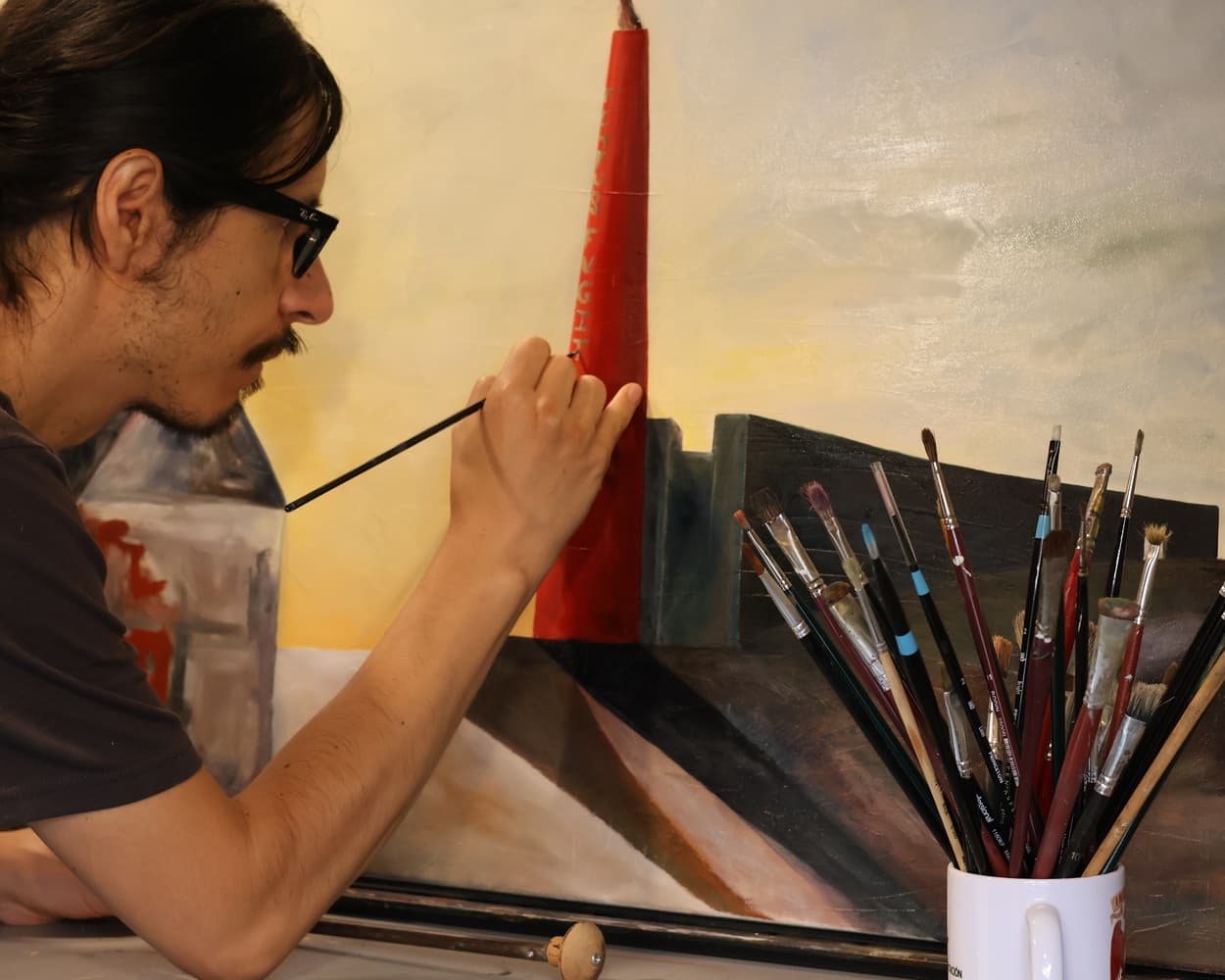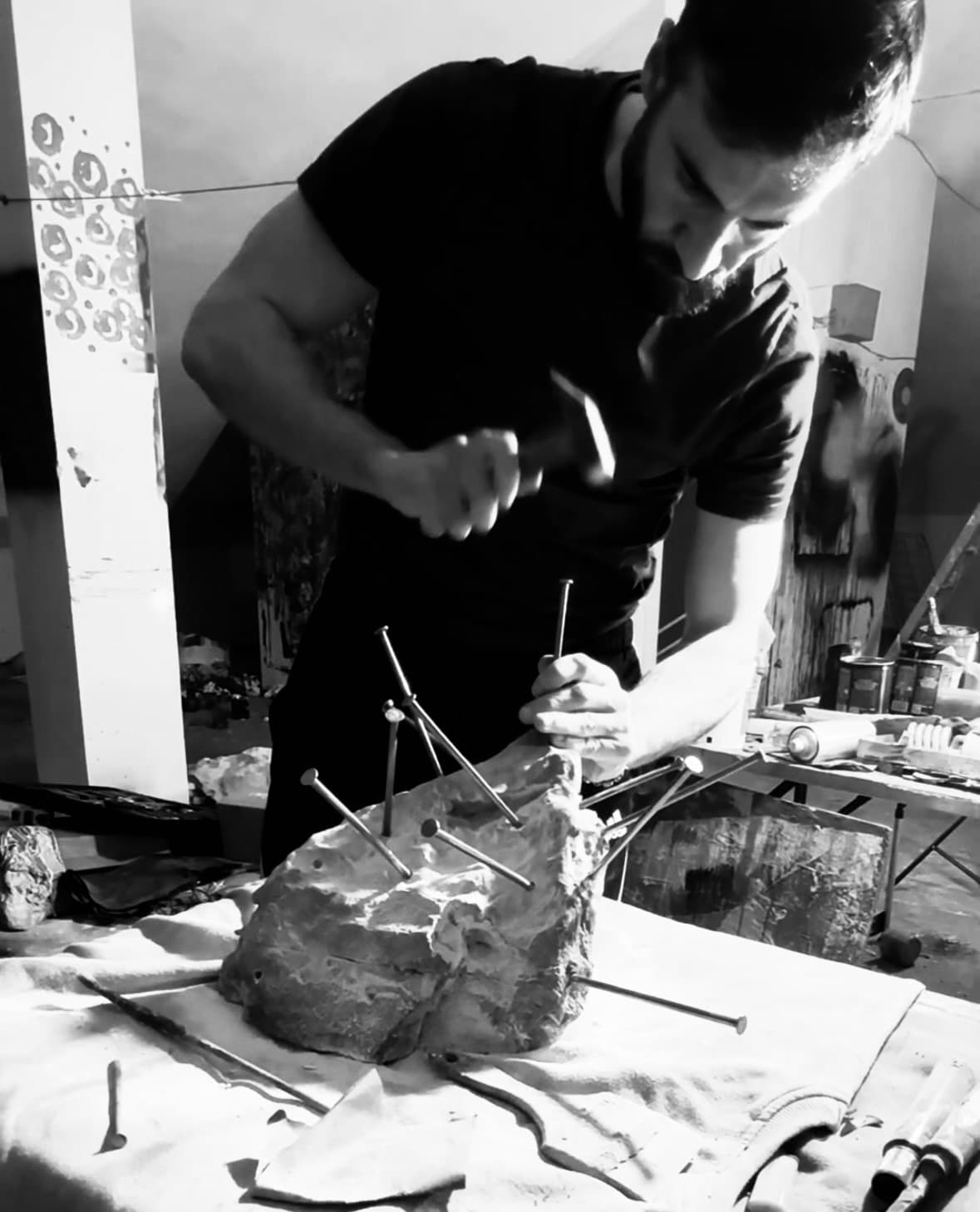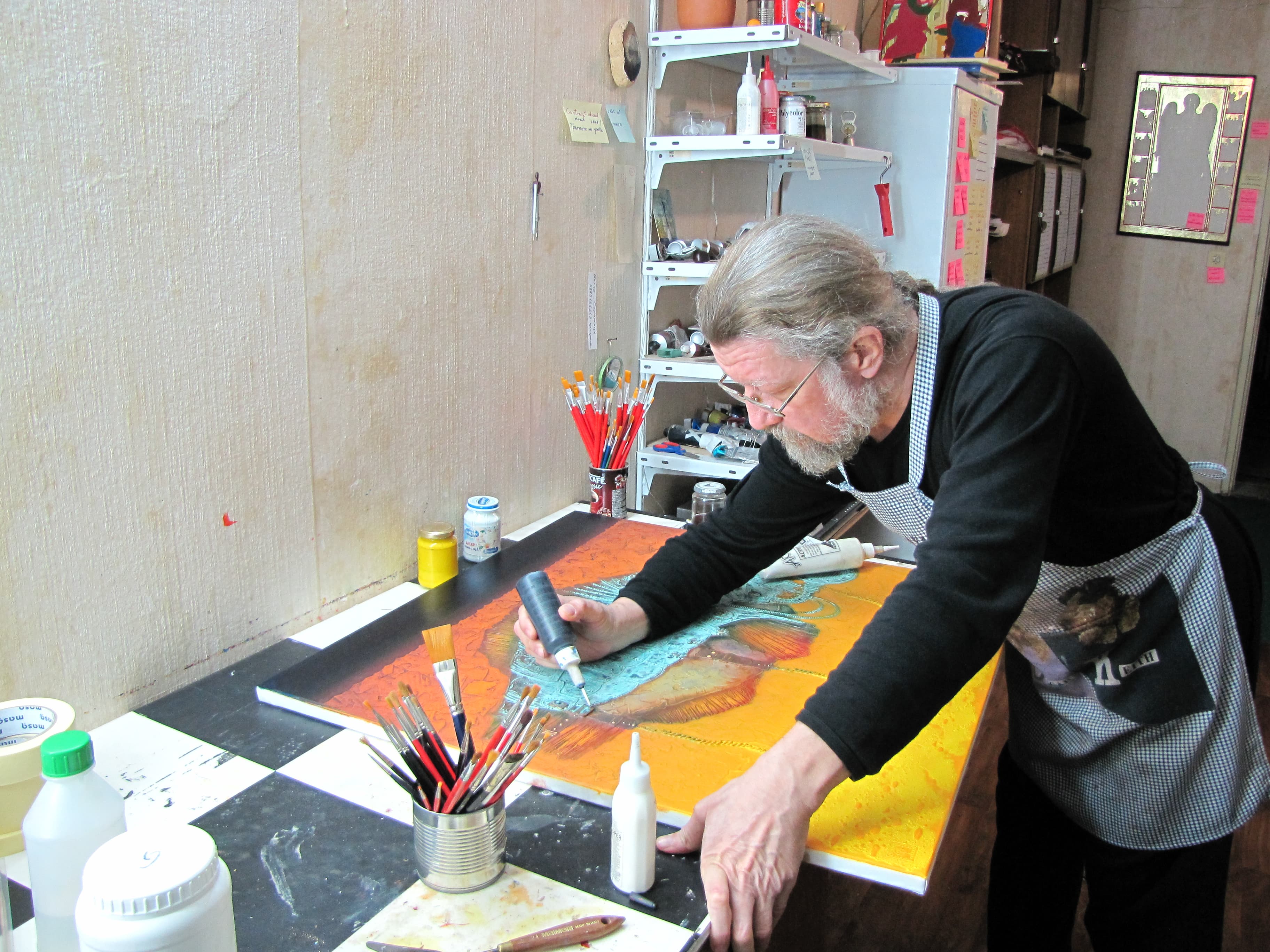
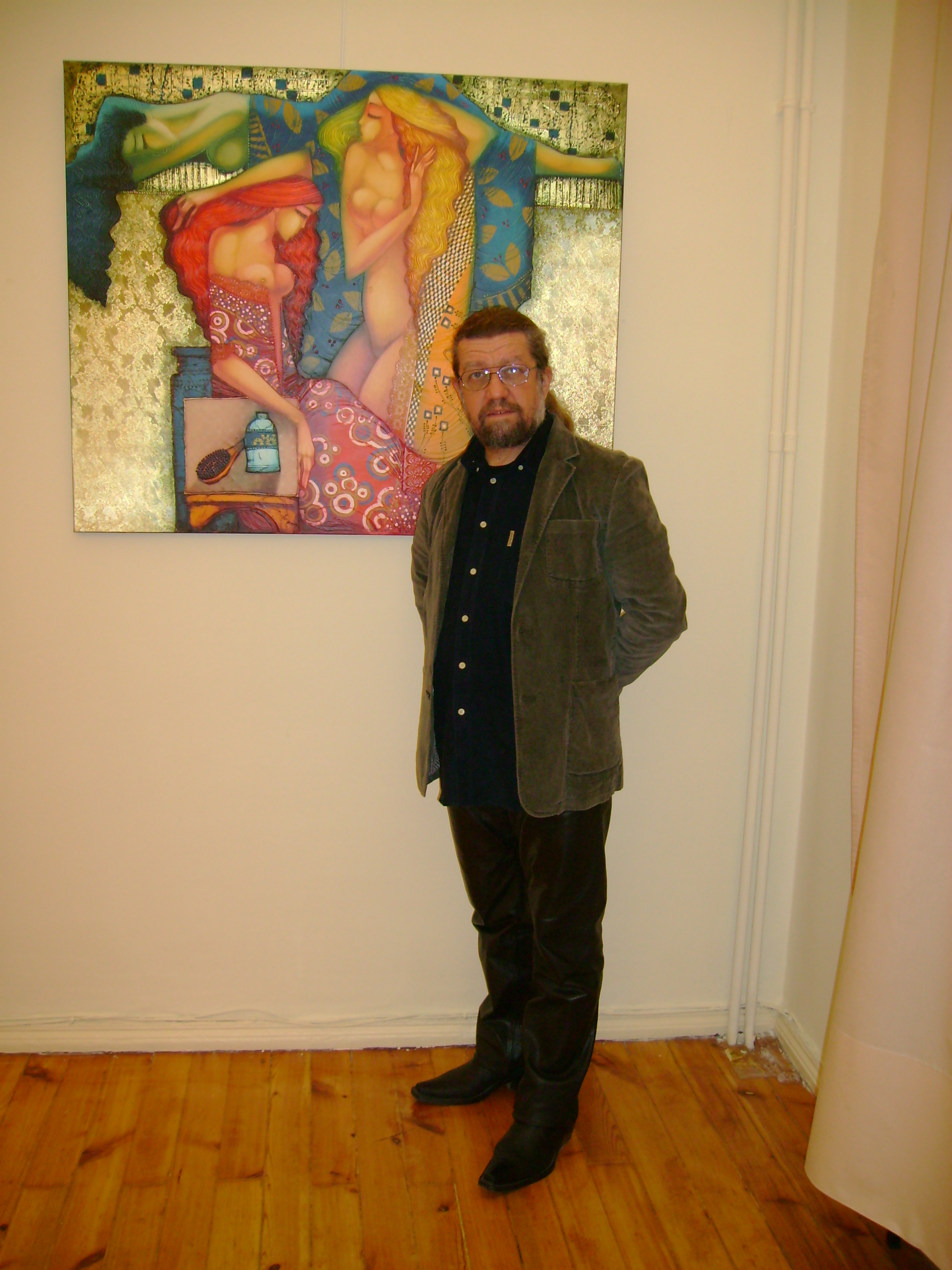
Stefan Georgiev, born in Bulgaria in 1954, occupies a distinctive position within contemporary Surrealist painting. His practice, which spans more than half a century, draws together sculpture, icon restoration, book illustration, and mixed-media painting into a singular visual language rooted in symbolism, mythology, and the human figure.
Represented on the ArtRewards platform, where a substantial body of his available and sold works can be viewed, Georgiev's output offers collectors a rare opportunity to engage with an artist whose formal training, cross-disciplinary experience, and documented philosophy of art converge in each canvas. This article examines Georgiev's artistic formation, his technical methodology, the recurring iconography that structures his work, and a selection of representative pieces from his ArtRewards profile, assessed through established art-historical frameworks.
Formation and Artistic Philosophy
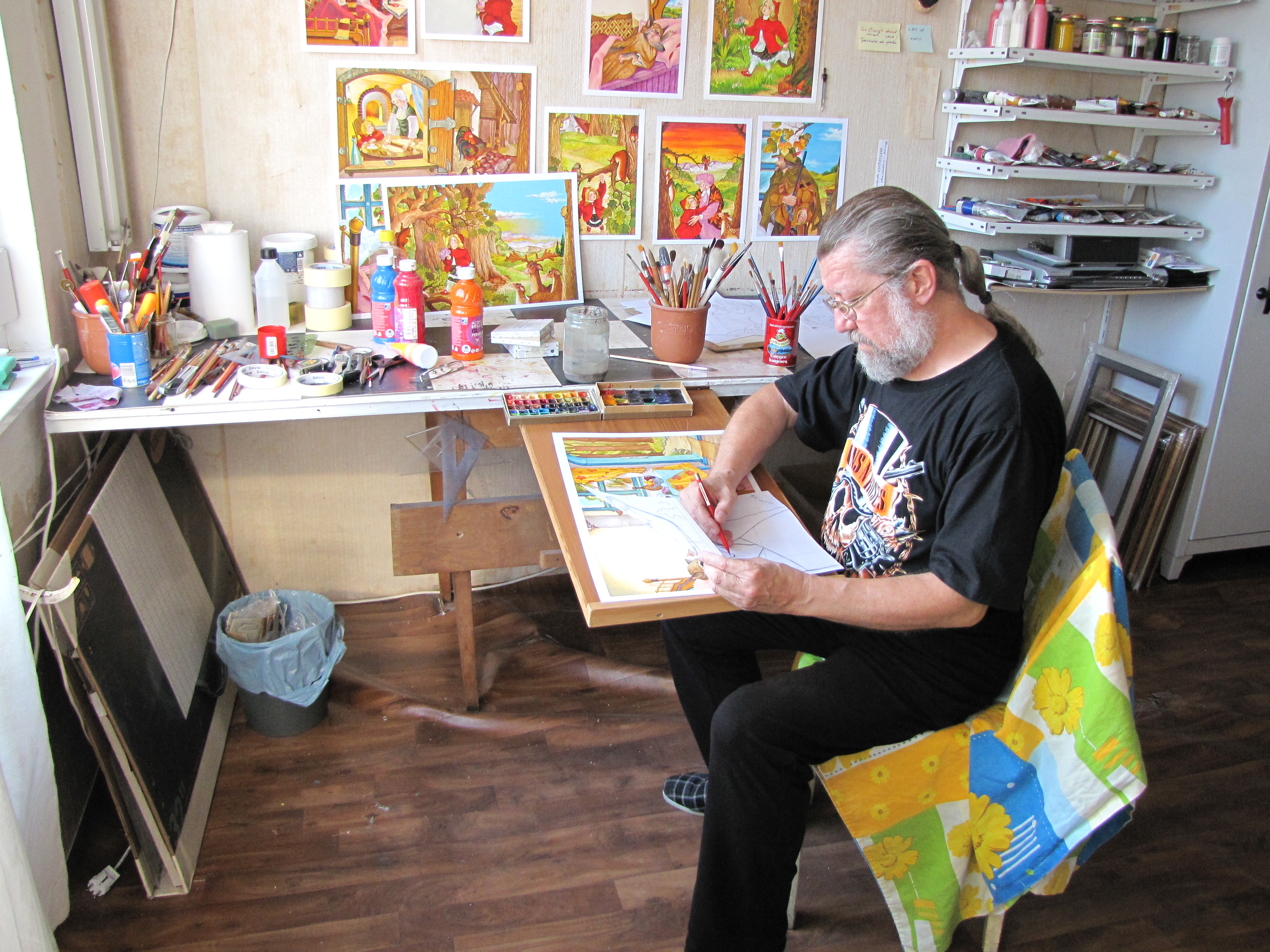
Georgiev's engagement with image-making began in early childhood, prompted by illustrated fairy-tale books that he encountered before he could read. This early immersion in narrative imagery, entering stories "through the images and through my own imagination," as he describes it, established a foundational link between visual art and the construction of alternative, invisible worlds, a theme that persists throughout his mature output. His formal education followed a conventional academic trajectory: attendance at an art-focused secondary school, followed by study at the Faculty of Fine Arts. This grounding in academic draughtsmanship underpins even his most surreal compositions, which are invariably built from careful preparatory sketching rather than spontaneous execution.
Georgiev was born in Bulgaria during the Soviet era, a biographical detail that carries particular weight for understanding the conceptual framework of his work. He has spoken of the constraints on expression that characterised this period and of the subsequent, and at times disorienting, freedom brought by democratic transition a freedom that introduced, in his words, "another responsibility: not to betray yourself." This tension between constraint and liberty, between the visible and the suppressed, maps closely onto the thematic preoccupations of his paintings, which consistently probe the boundary between everyday reality and a hidden, symbolic interior world.
Of particular significance to his technical and iconographic development is his period as a restorer at the Cherepish Monastery, where he produced numerous copies of Orthodox icons. This experience situates Georgiev within a lineage that extends to the Byzantine icon tradition, a connection evident in his sustained use of gold leaf and in the stylised, non-naturalistic treatment of the human figure that recalls the hieratic conventions of icon painting. For collectors unfamiliar with this tradition, it is worth noting that Byzantine iconography traditionally employed gold not as decorative flourish but as a signifier of divine or transcendent space, a convention Georgiev appears to inherit and secularise within a contemporary Surrealist idiom.
Technique and Materiality
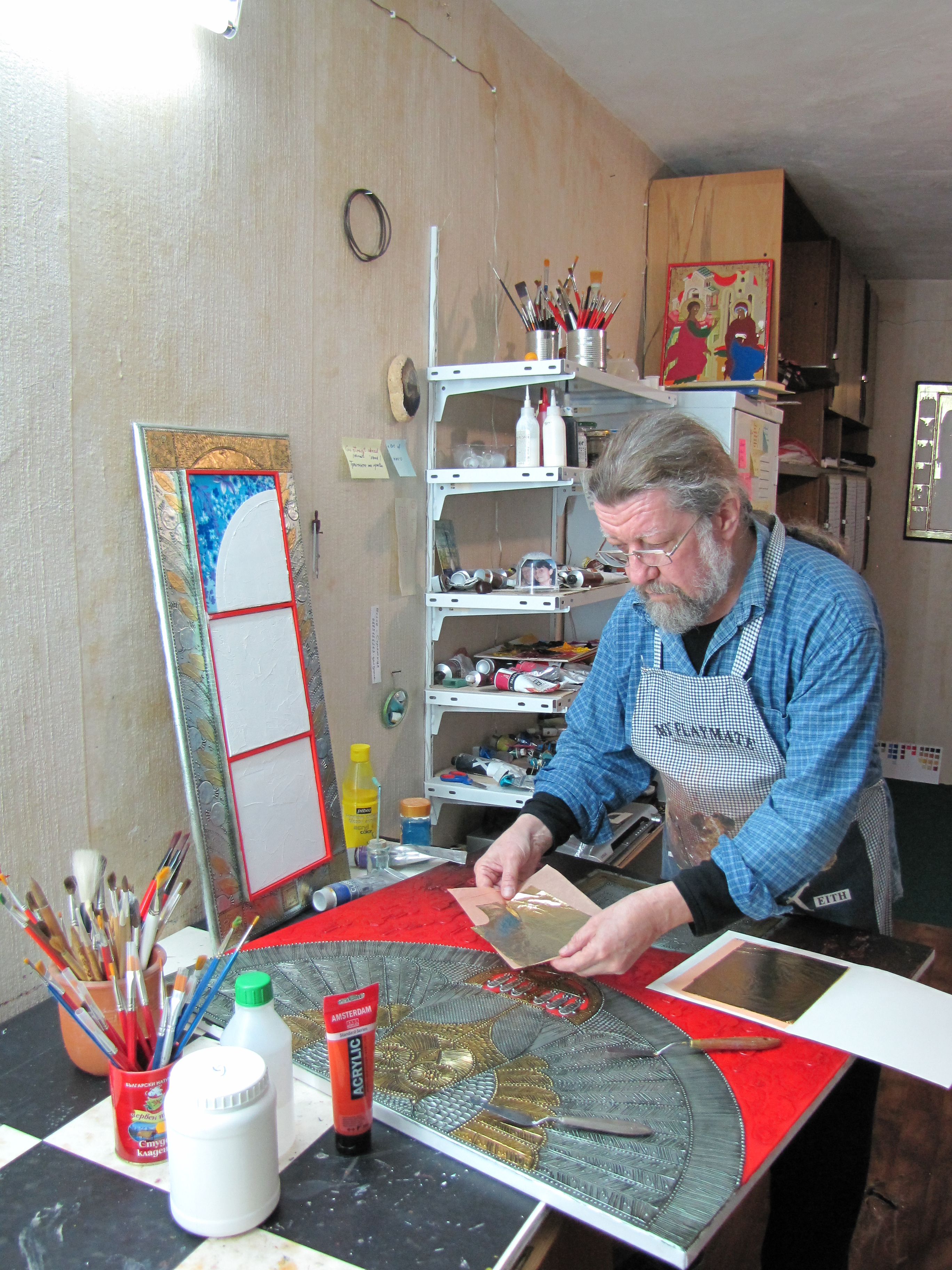
Georgiev works predominantly in mixed media, combining oil and acrylic paint with acrylic structural pastes, gold and silver leaf, and chemical patinas. For the benefit of collectors less familiar with these terms: structural paste is a thickened acrylic medium applied to build physical relief on the canvas surface, allowing the artist to introduce tactile texture and sculptural dimensionality before painting begins; patina, traditionally associated with the oxidation of metal surfaces, is here used to describe the chemical or pigment-based treatments applied to metallic leaf to achieve variegated, aged, or lustrous effects. The combination of these materials situates Georgiev's practice at the intersection of painting and low-relief sculpture, a hybridity consistent with his earlier training in sculpture and woodcarving.
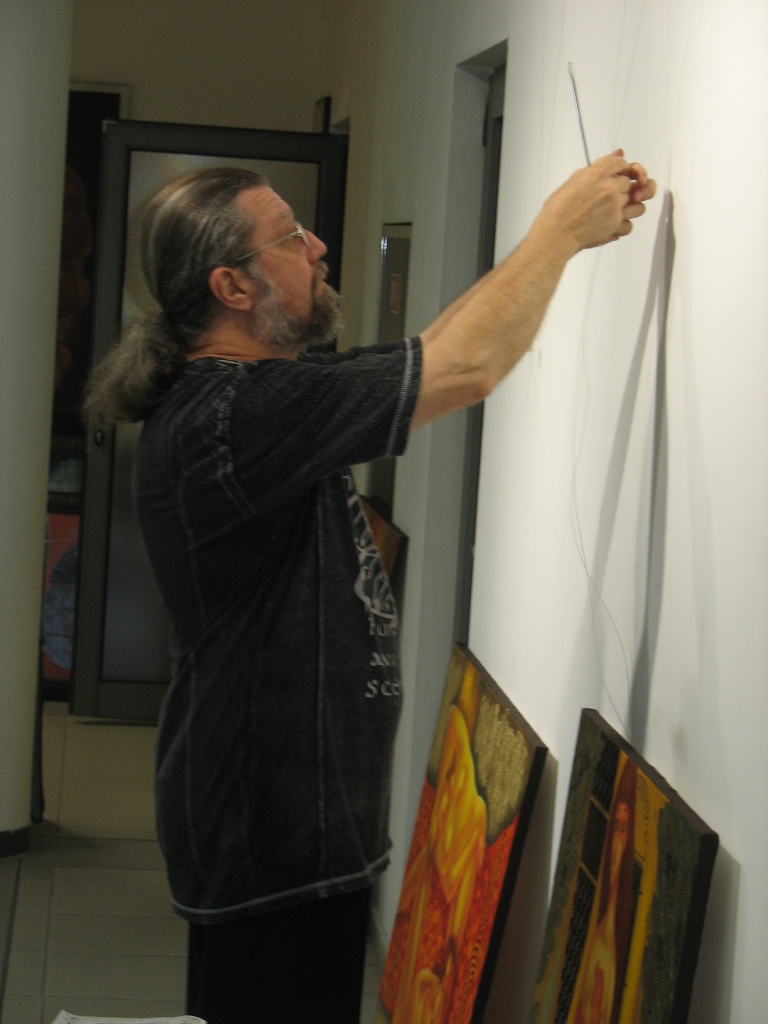
His working method follows a disciplined, almost ritualistic sequence: an initial idea, often arrived at gradually, is developed through a series of small preparatory sketches subject to repeated revision. Only once a composition has stabilised does he enlarge and transfer it to canvas, a surface he describes as "sacred," never marked without a fully considered plan. This procedural discipline distinguishes Georgiev from more improvisational Surrealist practitioners and aligns him instead with an academic tradition in which draughtsmanship precedes and governs painterly execution. Notably, he reports that works are sometimes left unresolved for extended periods, propped against the studio wall until their completion becomes evident to him, a practice that underscores the intuitive, non-linear temporality of his creative process, even within a highly structured technical framework.
Iconography and Symbolic Vocabulary
Applying an iconographic reading in the tradition established by Erwin Panofsky, which distinguishes between the primary subject matter of an image, its conventional or allegorical meaning, and its deeper cultural significance, Georgiev's recurring motifs reward sustained analysis. The female figure occupies a central position in his oeuvre, serving as a vehicle for the exploration of desire, vulnerability, and interpersonal intimacy, frequently situated in a liminal zone between waking reality and dream. The moon recurs as a signifier of solitude and interiority; the apple invokes associations with temptation and forbidden knowledge, most obviously biblical in origin; birds function as emblems of freedom and transcendence; and the egg, perhaps the most conceptually loaded of his symbols, operates as a metaphor for origination, transformation, and the latent potential of creative work itself.
Crucially, Georgiev resists fixing these symbols to singular meanings, preferring instead to preserve interpretive latitude for the viewer. This openness aligns his practice with a broader Surrealist inheritance, one in which symbolic ambiguity is treated not as a deficiency of communication but as a deliberate strategy for engaging the unconscious associations of the audience. His stated influences reinforce this reading: Gustav Klimt, the Vienna Secession's foremost painter, whose decorative use of gold leaf and ornamental stylisation of the female form offers an evident formal precedent; Surrealism's embrace of the irrational and the dreamlike; the compositional sophistication of Renaissance figuration; and the chromatic juxtapositions characteristic of Impressionist colour theory. Applying a formalist lens in the manner advanced by Heinrich Wölfflin which attends to the treatment of line, plane, and surface rather than subject matter alone, one observes in Georgiev's work a persistent tension between linear, graphic stylisation inherited from illustration and icon painting, and a painterly, textural surface built through relief and metallic patination.
Selected Works: Critical Analysis
The following discussion draws on a selection of paintings currently and previously available through Georgiev's ArtRewards profile, chosen for their representative engagement with the artist's documented thematic and technical concerns. As compositional details, dimensions, and full visual descriptions are best appreciated through direct inspection of the works themselves, collectors are encouraged to consult the artist's profile for a complete visual account; the analysis below situates each piece within the broader critical framework established above.
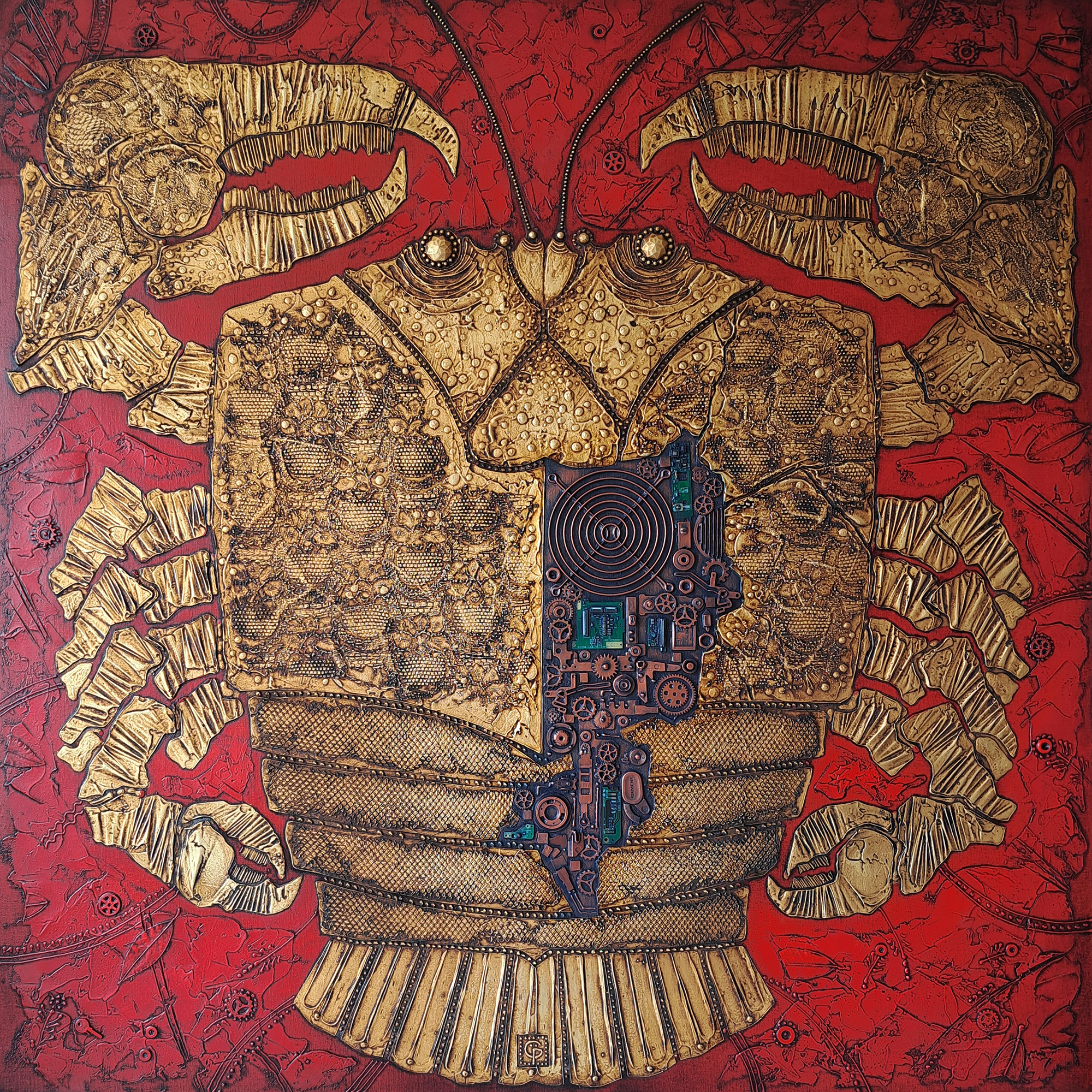
Metamorphosis. The title alone signals an engagement with transformation, a theme consonant with Georgiev's recurrent use of the egg as a symbol of creative origination. Read through an iconographic lens, a painting bearing this title invites consideration of transitional states between forms, between the visible and invisible worlds the artist repeatedly invokes in his own account of his practice. Formally, one would expect such a work to exploit the relief and layering possibilities of the artist's signature mixed-media approach, using structural paste and metallic leaf to visually enact the process of change the title announces.
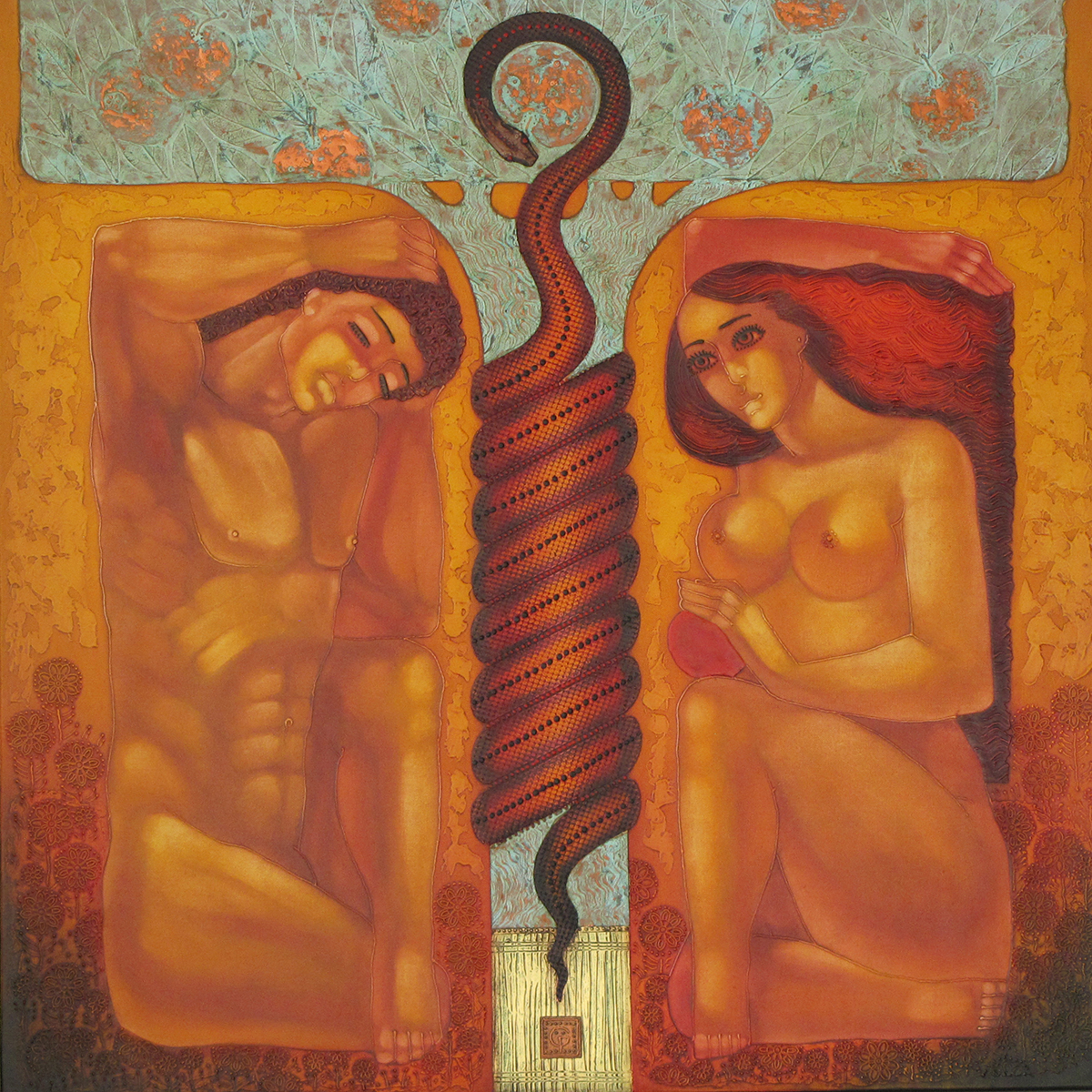
The First Sin. Dating from 2016, this earlier work engages directly with biblical narrative, a category of subject matter Georgiev has identified as a recurring source for "speaking about timeless human emotions" through mythological and scriptural reference. The subject inevitably invokes the symbolism of the apple as previously discussed a motif he associates with temptation, knowledge, and desire and situates the painting within a long Western art-historical tradition of Edenic representation, from Northern Renaissance panel painting to modern reinterpretation. Georgiev's biblical subjects are distinguished from academic precedent by his stylised, non-naturalistic figuration, which deliberately departs from illusionistic representation in favour of a symbolic economy closer to icon painting than to narrative realism.
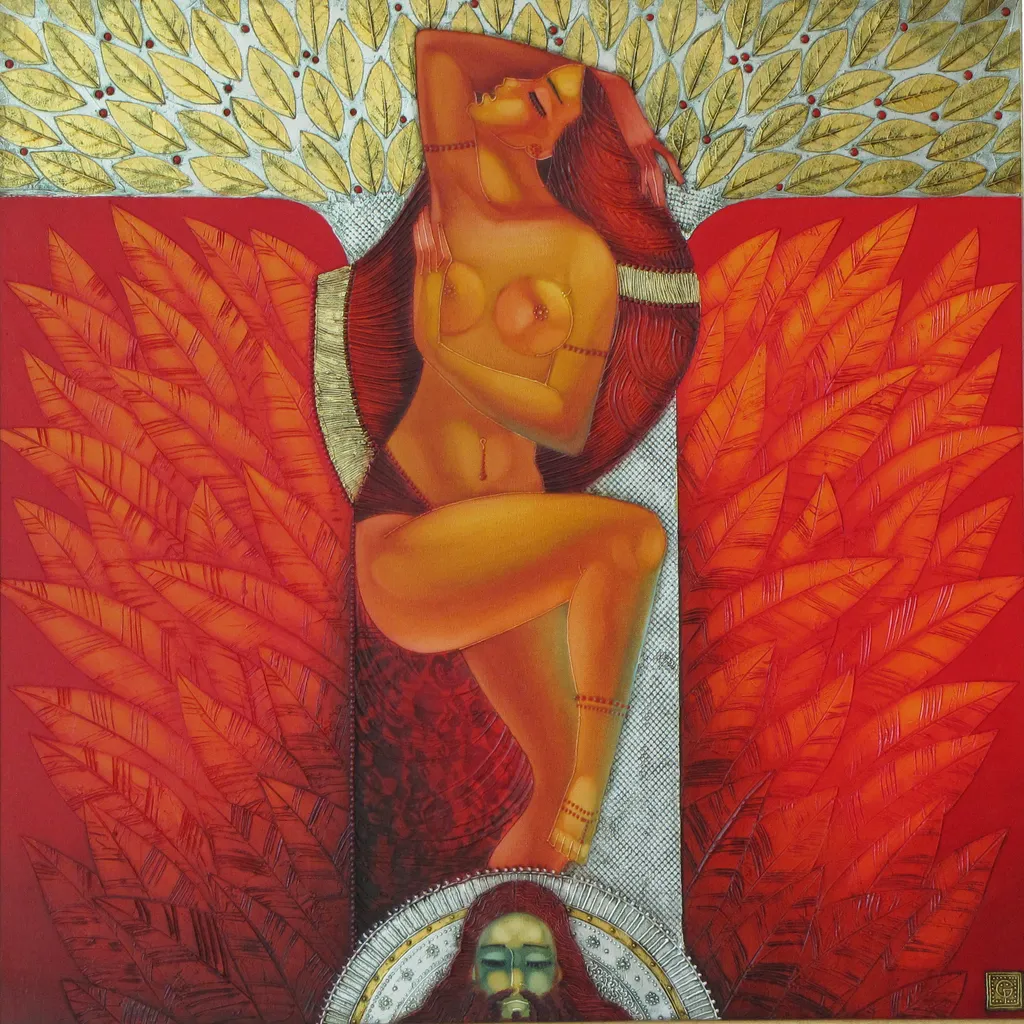
The Dance of Salome, from 2018, draws on a biblical-mythological figure with a rich afterlife in fin-de-siècle art, most famously in the work of Gustav Klimt and his Symbolist contemporaries an association that resonates directly with Georgiev's self-declared admiration for Klimt's "graceful human figures and sophisticated compositions." The subject of Salome, historically associated with themes of seduction, danger, and the destabilising power of female desire, aligns closely with Georgiev's broader preoccupation with the female figure as a vehicle for exploring "love, attraction, desire, tenderness, vulnerability." This thematic continuity across nearly a century and a half of Symbolist and post-Symbolist art demonstrates the durability of such iconography within collectors' markets and offers a point of comparative interest for those building collections around fin-de-siècle revivalism.
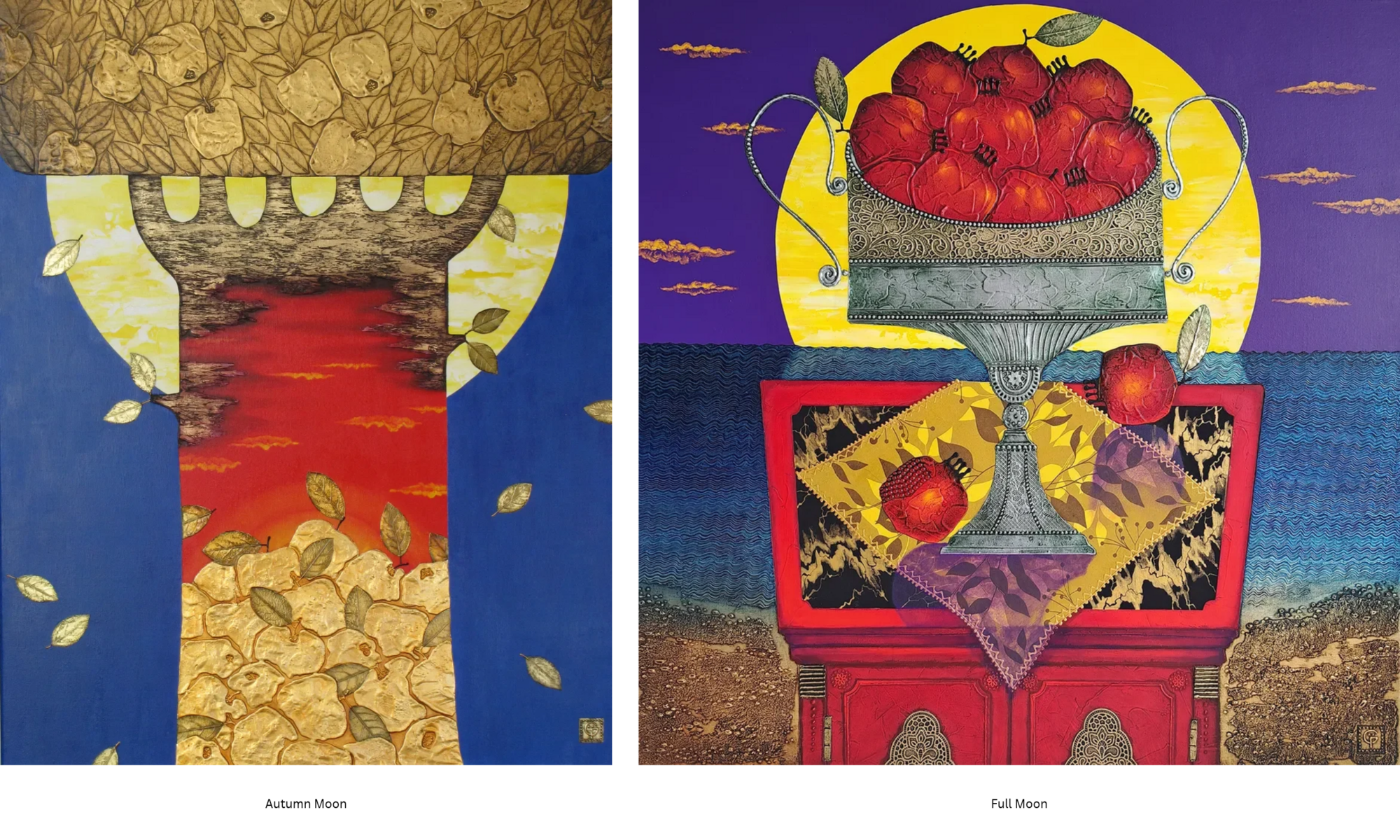
Autumn Moon (2020) and Full Moon engage directly with the lunar symbolism Georgiev identifies as central to his private visual vocabulary, associated with "solitude, mystery, or an inner world." The pairing of these two works, created across different periods of the artist's practice, offers collectors an instructive opportunity to trace the evolution of a single recurring motif across his career a comparative approach consistent with the connoisseurial methods long employed in the study of an artist's symbolic development.
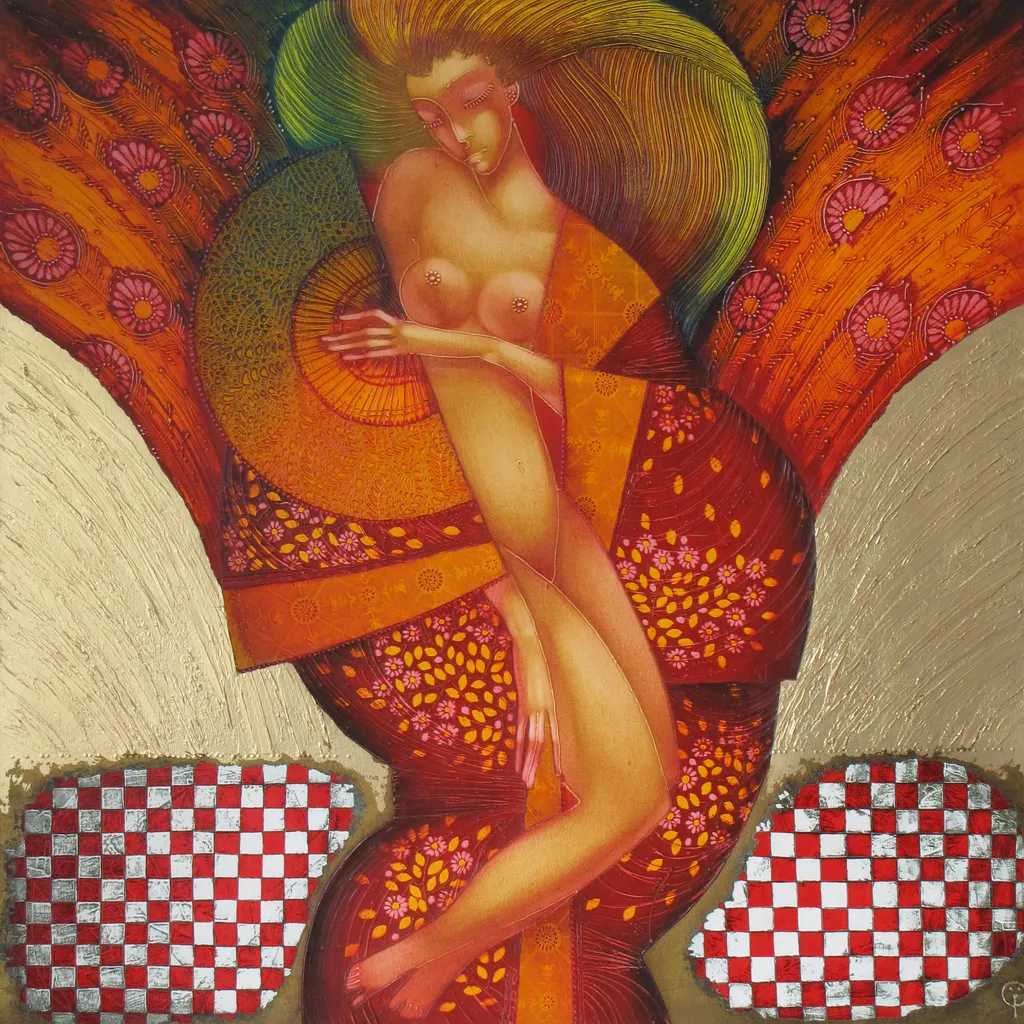
Phoenix (2016) engages a mythological subject whose association with cyclical destruction and rebirth aligns naturally with the transformative symbolism Georgiev attaches to the egg and to metamorphic imagery more broadly. The subject also provides a plausible occasion for the sustained use of gold and silver leaf, given the Phoenix's traditional iconographic association with fire, radiance, and solar imagery technical choices that would further connect the painting to the Byzantine gilding tradition absorbed during the artist's restoration work at the Cherepish Monastery.
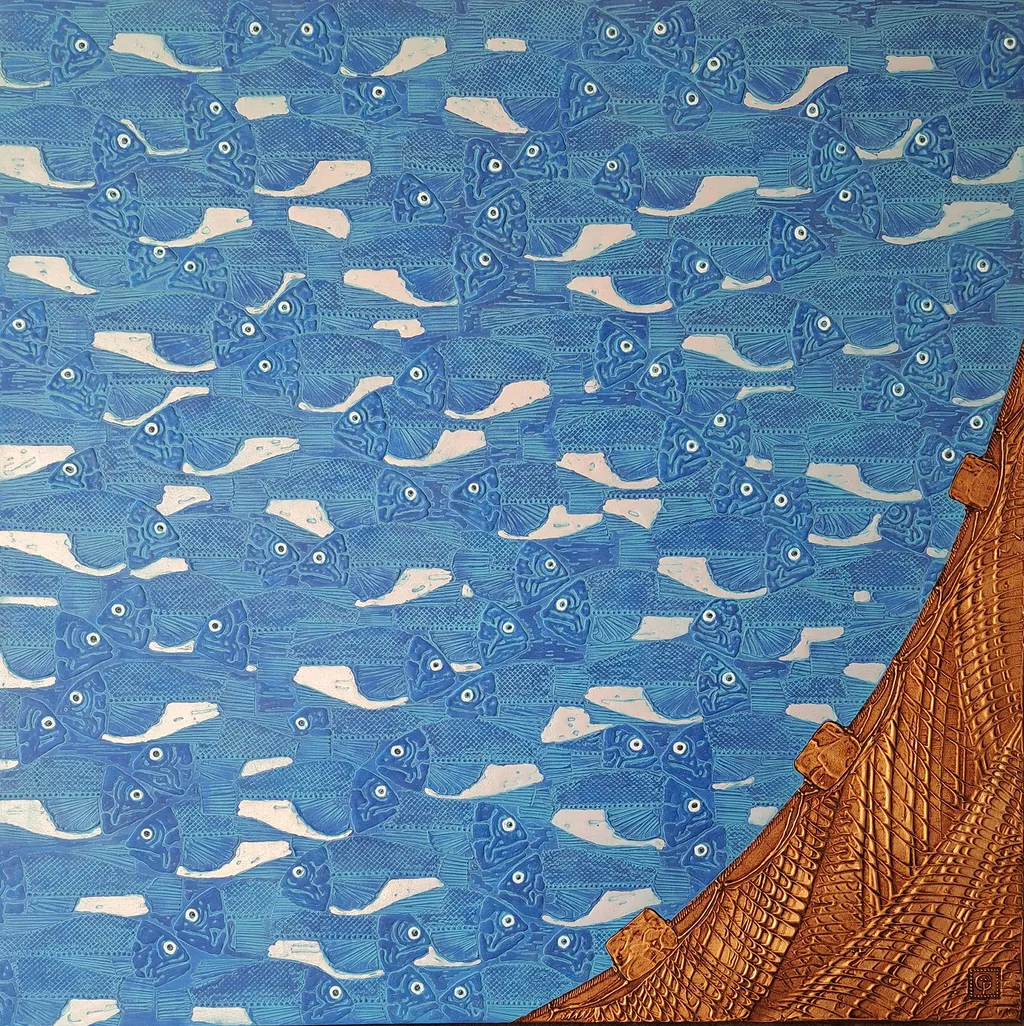
Golden Opportunity foregrounds, through its title, the metallic leaf technique that forms one of the most distinctive aspects of Georgiev's mixed-media practice. The deliberate invocation of "gold" situates the work within the artist's stated intention to use gold and silver leaf to "introduce another dimension and create contrasts within the paintings" a technical strategy with clear antecedents in both Klimt's Vienna Secession gilding and the devotional gold grounds of Orthodox icon painting, here redeployed within a Surrealist, rather than devotional or decorative, register.
Collectively, these works demonstrate the consistency with which Georgiev's painterly titles, technical choices, and documented philosophy align a coherence that offers collectors confidence in the authenticity and conceptual integrity of the broader body of work available through his ArtRewards profile, which also includes further paintings such as Transcendence, SACRA SOLUTA, Secrets of the Ocean, Seventh Heaven, Gods or Humans, and The Blue Room, each warranting individual consideration by prospective collectors.
Contribution to the Artistic Community
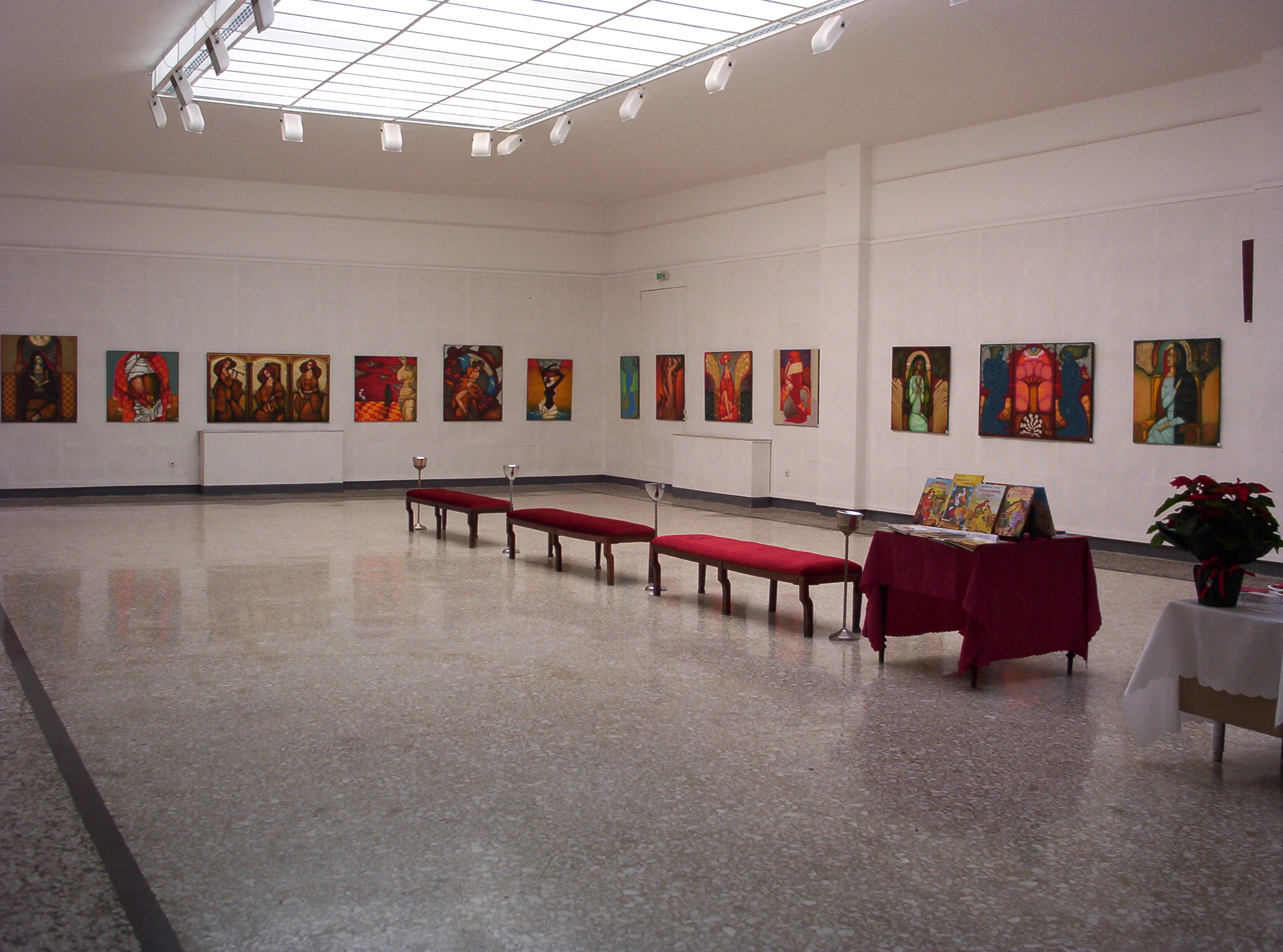
Beyond his individual output, Georgiev has sustained a long-standing engagement with the professional art world. He has been a member of the Greek Chamber of Fine Arts (EETE) since 2007, participating in both solo and group exhibitions during a formative period spent in Greece, an experience he credits with exposing his work to alternative cultural and critical perspectives. He has continued to exhibit in Bulgaria alongside fellow artists, and his practice extends into publishing: he has illustrated more than twenty-eight books across a range of publishing houses, demonstrating considerable versatility in adapting a personal visual language to the narrative requirements of other authors.
Georgiev has been candid about his ambivalence toward the commercial dimensions of an artistic career, noting that he has relied increasingly on galleries, art managers, and online platforms such as ArtRewards, Saatchi Art, Singulart, and OpenSea to bring his work before international audiences, while reserving his own energies for the studio practice of making. This division of labour between creative production and market presentation reflects a broader pattern among artists of his generation, for whom digital platforms have substantially lowered the barriers to international visibility without requiring direct management of commercial operations.
On the matter of critical and collector reception, Georgiev maintains a considered equilibrium: he values the contextualising function of critical writing while cautioning against over-intellectualisation that might dissolve the interpretive mystery he considers essential to a painting's effect. He has further observed that works acquired for display and ongoing engagement, rather than placed in storage, continue to fulfil what he regards as art's essential social function: to be seen and to sustain a relationship with its audience.
Conclusion
Stefan Georgiev's body of work offers collectors a rare combination of academic technical grounding, cross-disciplinary craft experience, and a coherent, decades-long symbolic vocabulary rooted in Byzantine, Symbolist, and Surrealist traditions. His sustained use of gold and silver leaf, structural relief, and stylised figuration situates his painting within a lineage extending from Orthodox icon painting through Klimt's Vienna Secession to contemporary Surrealism, while his recurring motifs the female figure, the moon, the apple, the bird, and the egg constitute a private but legible iconographic system open to sustained critical and connoisseurial engagement.
Those seeking to deepen their understanding of this body of work, or to consider individual pieces for acquisition, are invited to explore Stefan Georgiev's full profile on ArtRewards, where the complete range of available and previously sold paintings can be viewed in detail.