A Voice Reclaimed Through Paint
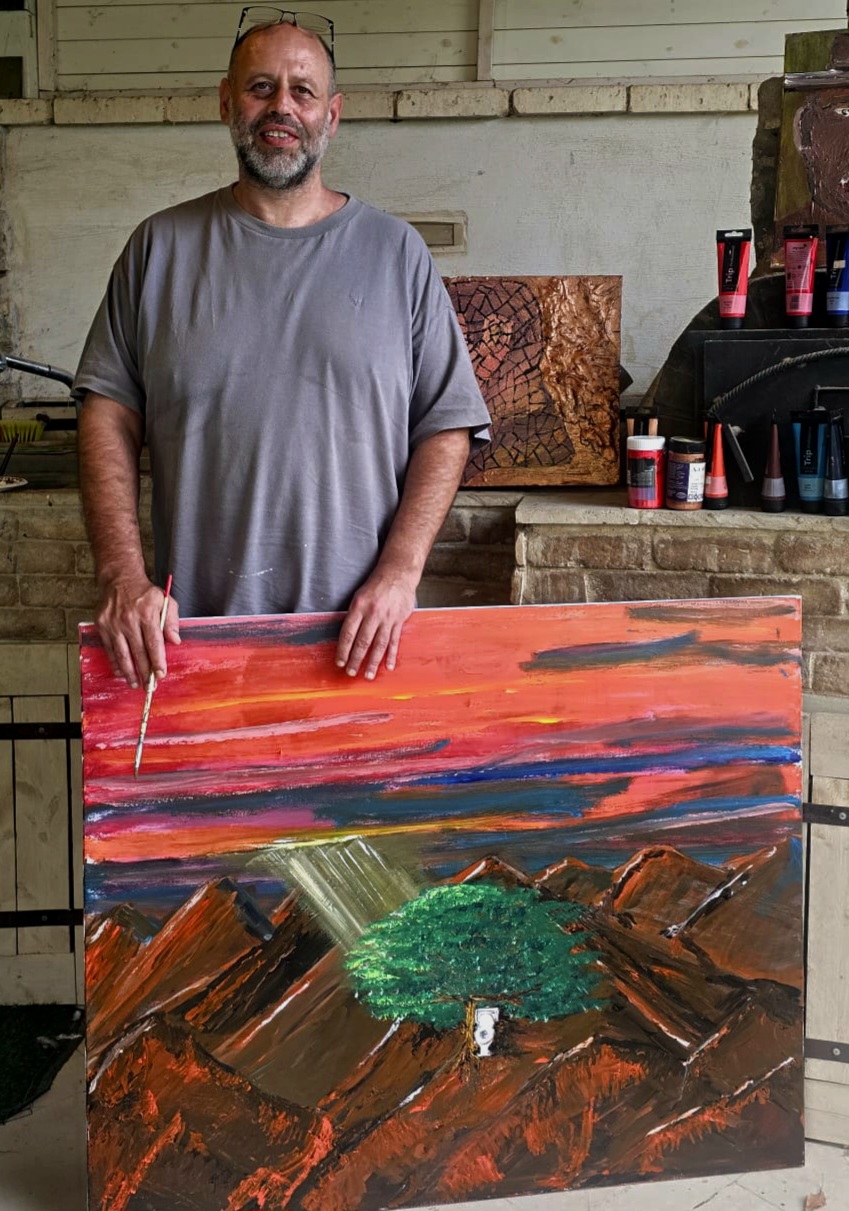
In the landscape of contemporary visual art, few practitioners arrive at their medium through circumstances as profound as those described by Izhak Volokita. The Israeli-born painter, working primarily within the registers of Abstract Expressionism and Surrealism, did not pursue painting as a calculated career choice. Rather, his practice emerged in late 2025 and 2026 following traumatic life events that left him unable to read or write prose. For Volokita, the canvas became what he describes as "an essential lifeline and a profound alternative language", a sanctuary in which an interrupted voice could be reconstituted through colour, texture, and gesture.
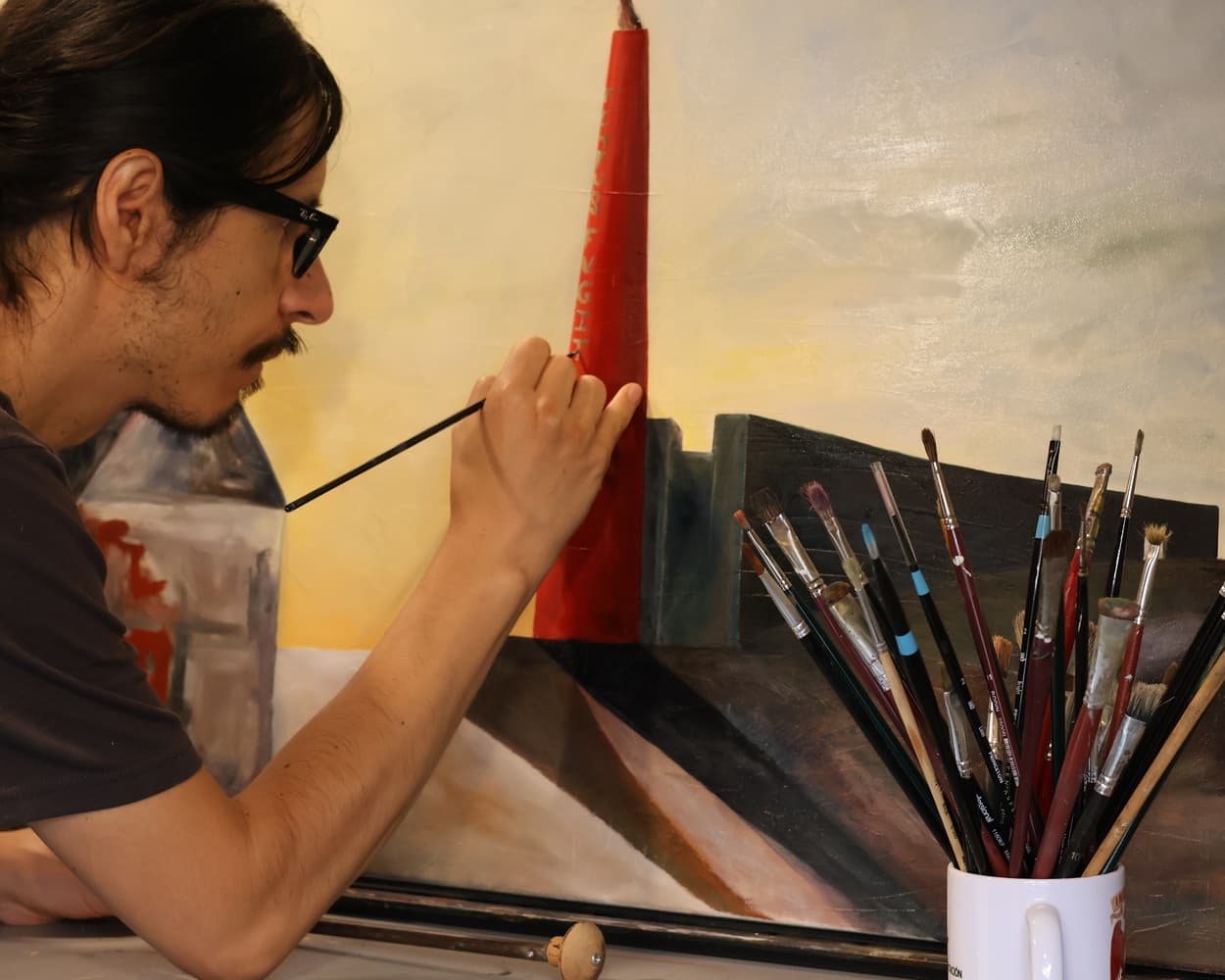
This origin story is not incidental to an appreciation of his work; it is foundational to it. Where many artists cultivate a visual vocabulary over decades of formal training, Volokita's practice is entirely self-taught, shaped instead by a BA in Logistics and an MPH in Emergency and Disaster Management. These unconventional credentials are highly relevant. His academic background in crisis management and structural thinking surfaces, paradoxically, in a practice that rejects structure altogether, privileging instinct, urgency, and the unrepeatable immediacy of the present moment over preparatory sketches or reference imagery. "I never use reference images, preparatory sketches, or blueprints," he states. The result is a body of work in which composition is not planned but discovered, built in real time through thick layers of acrylic and the insistent pressure of the palette knife.
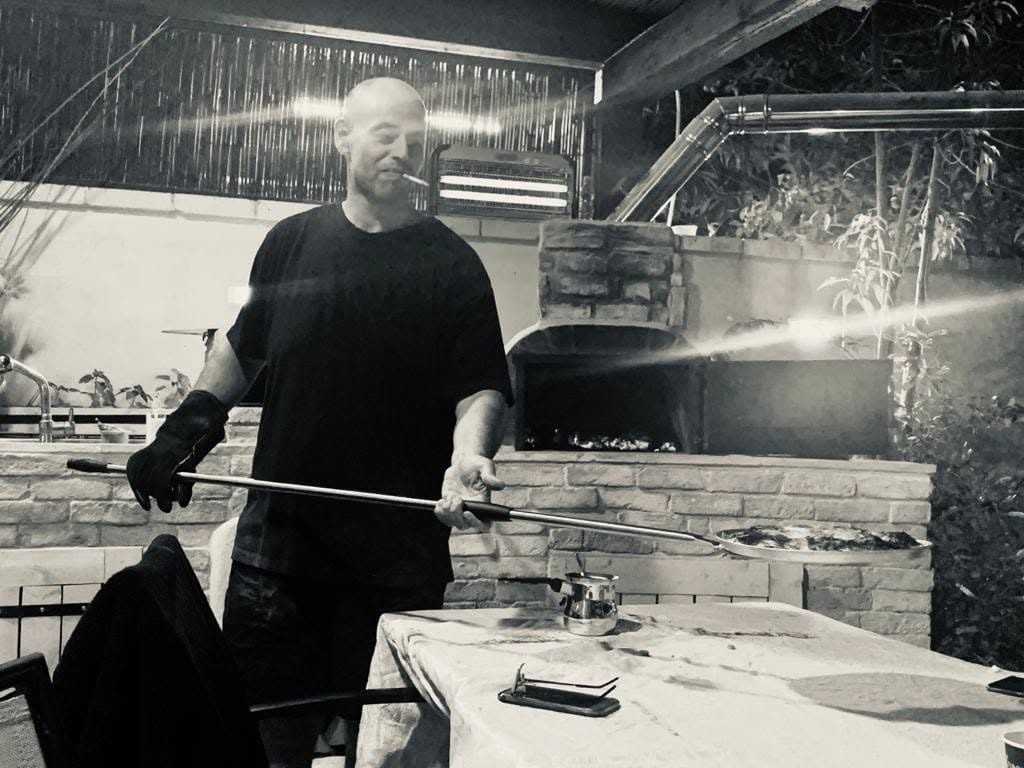
Central to Volokita's worldview is a conviction that imperfection constitutes the core beauty of a painting. This is not an aesthetic affectation but something closer to a philosophical position: a belief, informed by his years navigating high-pressure emergency environments, that entropy and disorder are the governing conditions of existence. Rather than resist this reality, his paintings metabolise it, transforming compositional deadlock, mood shifts, and even multiple reworkings of the same canvas into structural strength. He notes that beneath the surface of many finished works lie as many as four previous, abandoned paintings a palimpsest of discarded attempts that lends his impasto surfaces a literal, physical depth to accompany their psychological weight.
Technique as Testimony: The Double-Sided Canvas
Perhaps the most distinctive formal innovation in Volokita's practice is his use of both sides of the canvas to construct a single narrative. This is not a gimmick of presentation but a considered device for exploring cause and effect across a "zoom out / zoom in" dynamic. One face of a work might render a sweeping environmental context; its obverse isolates a single figure at a moment of consequence, implicating the viewer in a chain of narrative causality that can only be grasped by engaging with the object in the round. This technique demands an active, embodied viewer one who walks around the work rather than standing before it and, in doing so, it collapses the conventional distance between painting and sculpture, between image and event.
Several works within Volokita's ArtRewards portfolio exemplify this approach with particular clarity and warrant closer critical attention.
"Every Hell Has a Heaven – Two Sides"
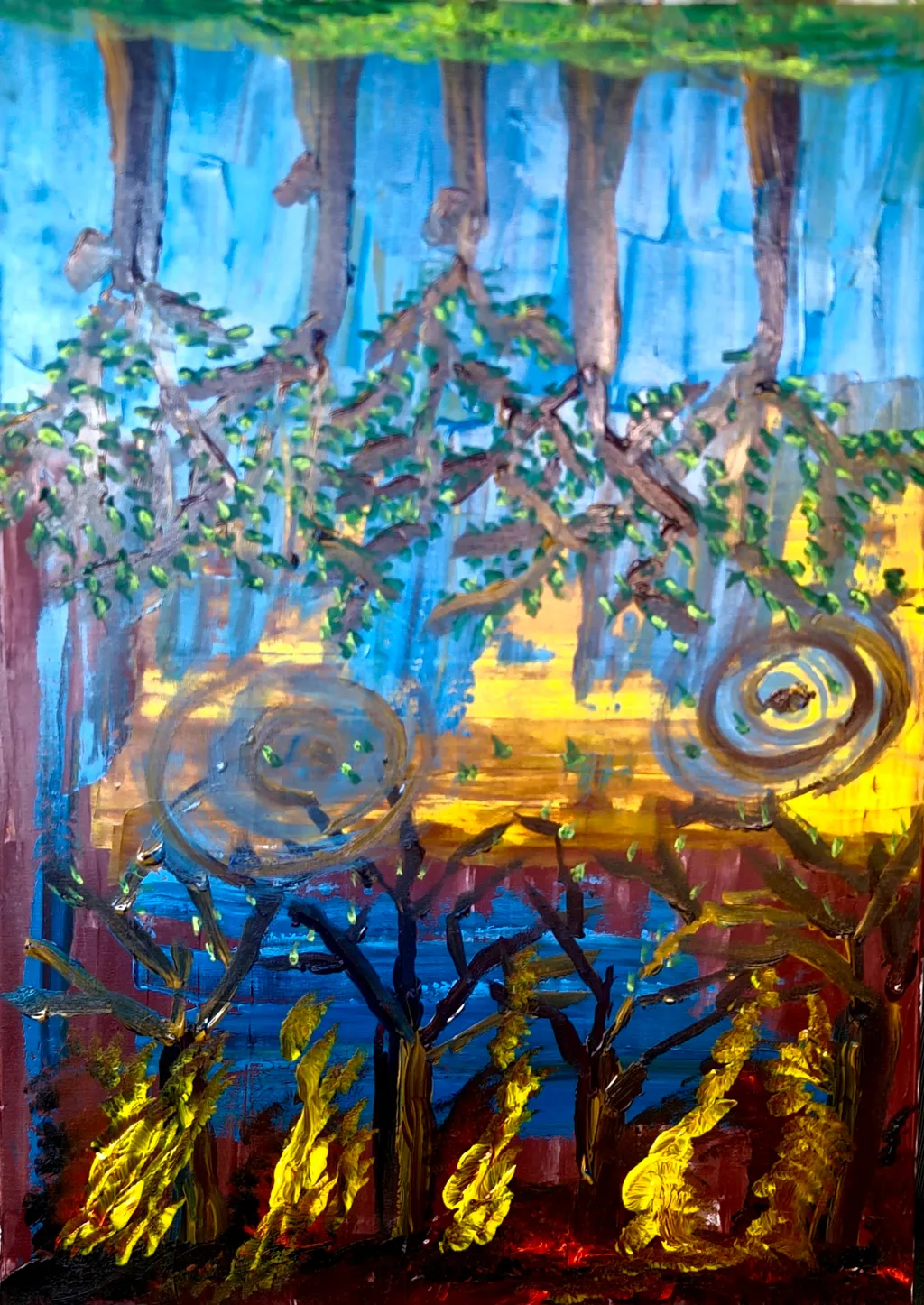
Among the artist's double-sided compositions, this piece stands as perhaps the most explicit articulation of his governing philosophy. The title alone signals a dialectical structure that mirrors the physical bifurcation of the canvas: suffering on one face, redemption or consolation on the other. Read through the lens of Volokita's stated methodology, his insistence on building compositions without preparatory planning, allowing the canvas to "dictate its own path" the work can be understood as a visual argument for duality as an organising principle of lived experience, rather than a simple before-and-after narrative. Academically, this positions the piece within a lineage of dualistic visual rhetoric that stretches from medieval diptychs depicting damnation and salvation through to the psychologically charged doublings found in twentieth-century Surrealist practice. Volokita's innovation is to strip this device of religious iconography and recast it in the raw, impasto-heavy vocabulary of gestural abstraction, allowing palette-knife texture rather than figurative symbolism to carry the theological weight of the title.
"The Electric Company"
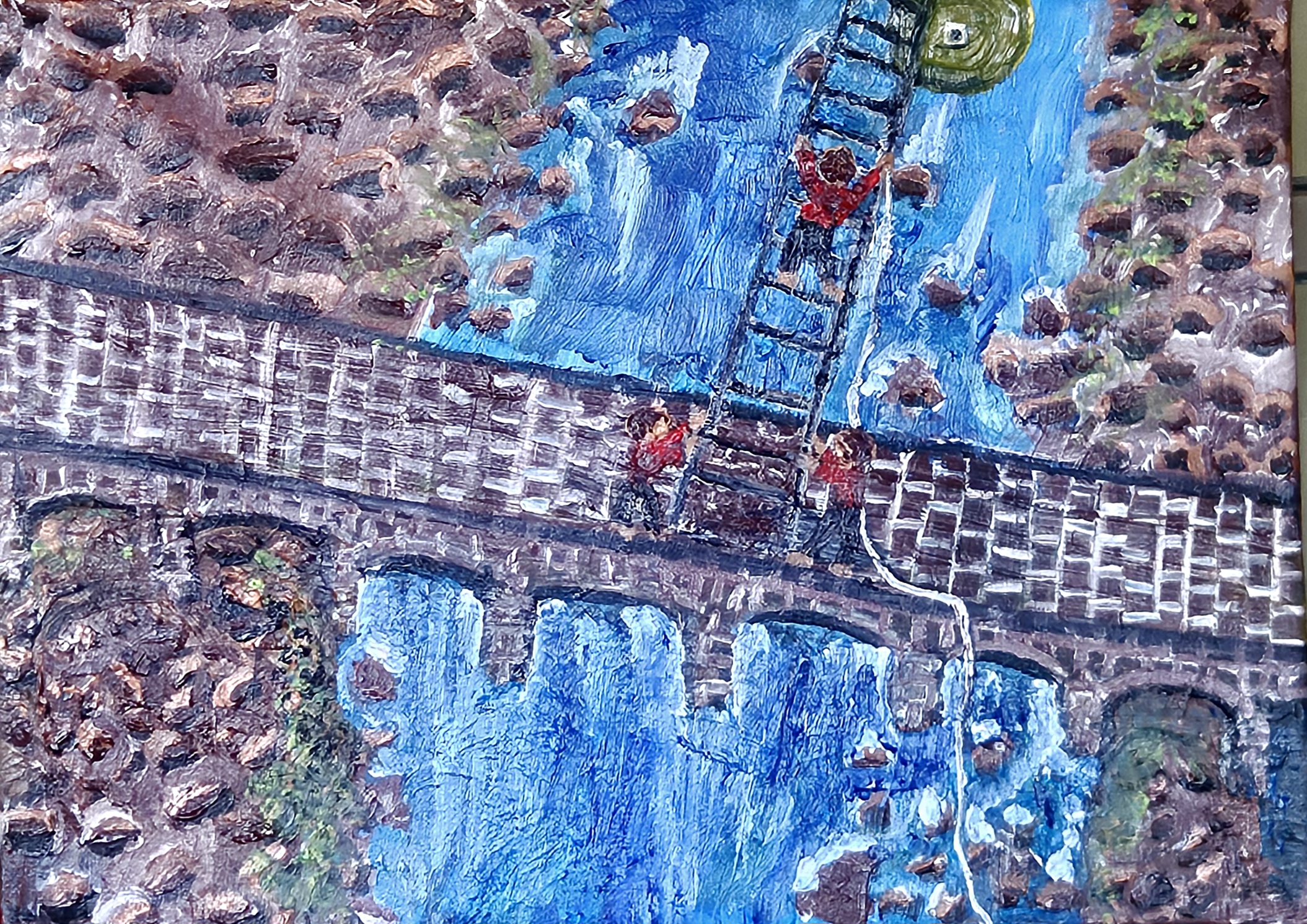
The recurring motif of the electrical socket finds explicit treatment in this work. Volokita has described sockets, charging cables, and power cords as a near-constant presence in his paintings, functioning as "a vital energetic core designed to supply power and strength to the figures within the composition," even when such elements are historically or temporally anachronistic. This deliberate anachronism is itself a significant curatorial and critical point: by inserting unmistakably contemporary domestic utilities into semi-abstract, often timeless-seeming compositions, Volokita disrupts any reading of his figures as purely mythic or allegorical. Instead, they are anchored quite literally, plugged into the mundane infrastructure of survival. "The Electric Company" can be read as a culmination of this motif, elevating the socket from background detail to titular subject, and in doing so, inviting a critique that engages directly with questions of energy, dependency, and sustenance as metaphors for psychological resilience. The work sits comfortably within a broader contemporary discourse on the aestheticisation of infrastructure, while remaining rooted in Volokita's deeply personal iconographic system.
"Cat as a Hat"
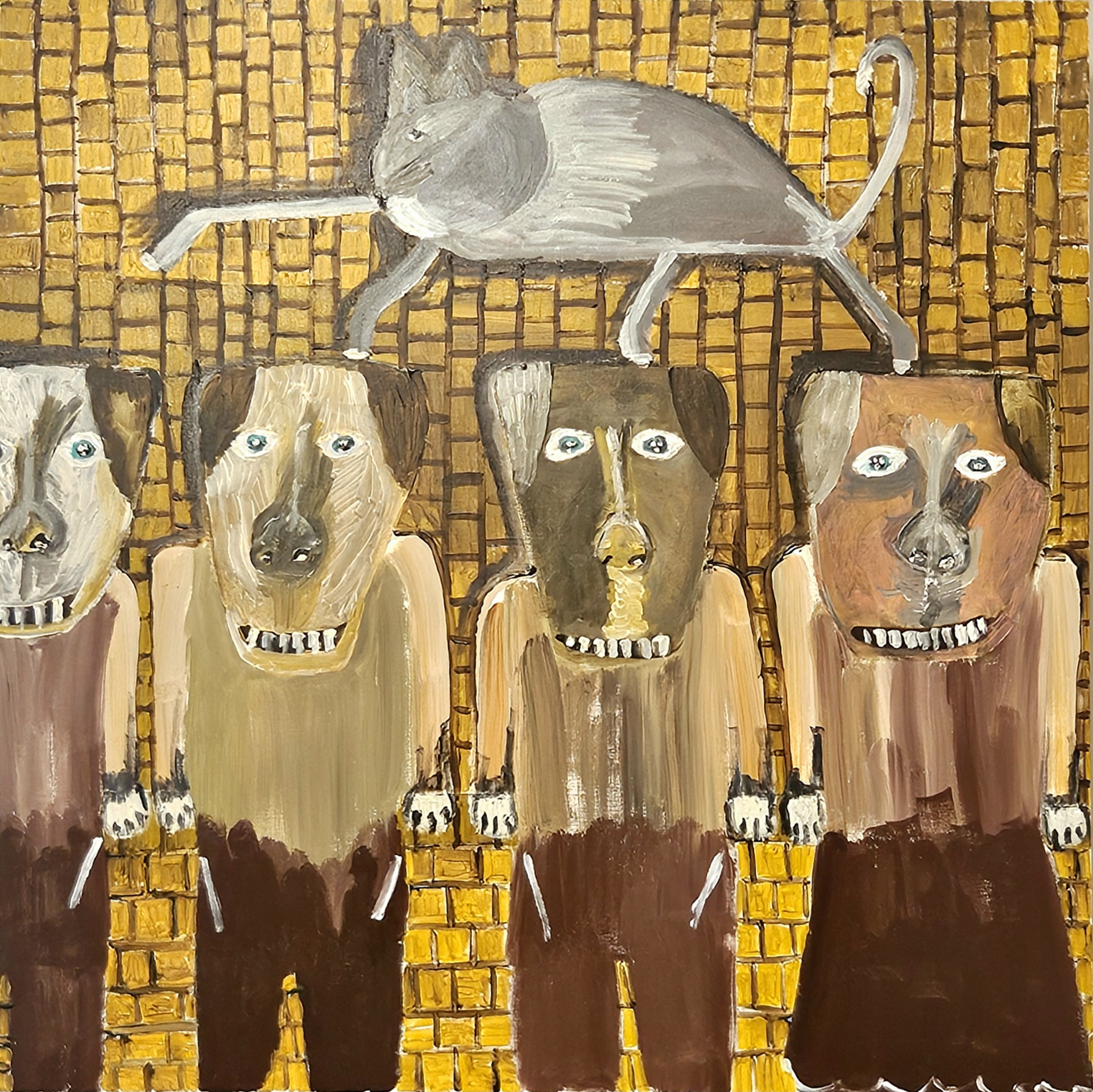
A lighter register emerges in this piece, though no less conceptually rigorous. Animals cats, dogs, birds, and ducks recur throughout Volokita's oeuvre as what he terms "silent, powerful symbols of instinct, freedom, and pure companionship." Given his candid acknowledgment that his domestic life with cats constitutes a central emotional anchor, "Cat as a Hat" reads as a work that plays with scale, intimacy, and the collapse of boundary between subject and adornment, body and companion. The surrealist inflection here is unmistakable: the displacement of a living creature onto the register of costume or ornament recalls a long art-historical tradition of destabilising the human figure through incongruous juxtaposition, from Magritte's bowler-hatted men to the hybridised creatures of outsider art. Critically, the work demonstrates Volokita's capacity for levity within a practice otherwise preoccupied with trauma and survival, suggesting a deliberate modulation of emotional register across his broader portfolio.
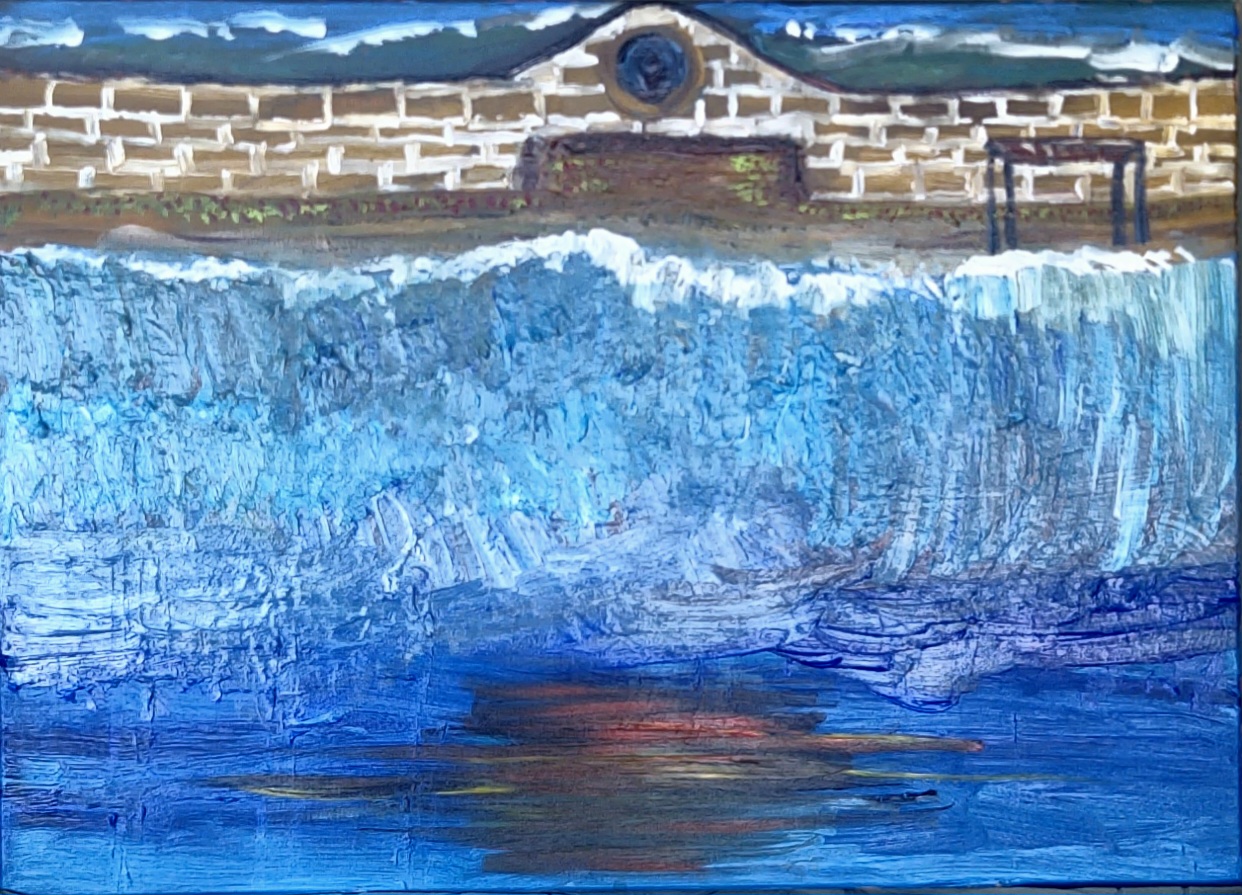
"The Wall of Exile"
Where "Cat as a Hat" offers levity, "The Wall of Exile" returns to the weightier existential registers that define much of Volokita's output. Exile, displacement, and separation are thematic preoccupations consistent with an artist who has spoken of losing, and subsequently rebuilding, his capacity for self-expression. The title suggests a barrier, literal or psychological, and invites consideration of the artist's heavily textured impasto surfaces as physical correlates for this obstruction. The accumulated layers of paint, often concealing earlier, abandoned compositions beneath, function here with particular critical resonance: the "wall" of the title may be read not only as subject matter but as medium, the thick accretion of acrylic itself standing as a material embodiment of accumulated history, concealment, and the difficulty of return. This conflation of subject and surface is one of the more sophisticated aspects of Volokita's practice, demonstrating an intuitive, rather than academically trained, grasp of the relationship between material process and conceptual content.
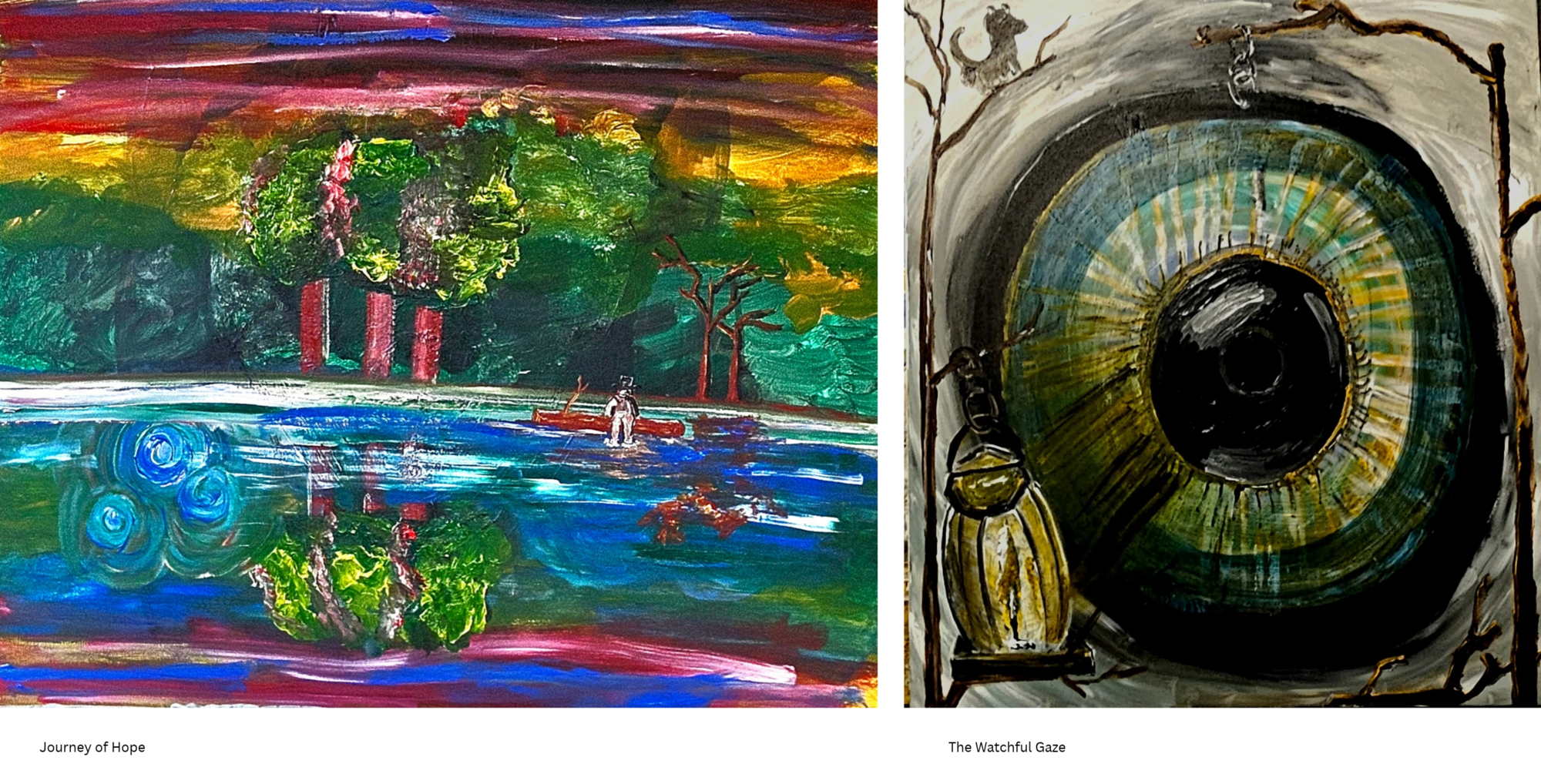
"Journey of Hope" and "The Watchful Gaze"
These two works, considered together, illustrate the narrative arc that frequently structures Volokita's compositions: movement from vulnerability toward resilience. "Journey of Hope" suggests a processual, forward-looking orientation consistent with the artist's broader reflections on transformation and his own passage from trauma into an urgent, consuming artistic vocation. "The Watchful Gaze," by contrast, implies observation, perhaps vigilance born of his background in disaster management and crisis response, where attentiveness to one's surroundings is a matter of survival. Positioned within his wider body of work, these pieces function as thematic bookends, dramatising the tension between threat and aspiration that recurs throughout his portfolio. Formally, both titles invite consideration of Volokita's handling of the palette knife not merely as a tool for texture but as an instrument of psychological disclosure, each ridge and furrow in the paint surface operating as a trace of the emotional urgency under which the work was produced.
Position Within Contemporary Practice
Volokita's refusal to treat painting as a commercial enterprise is worth noting in any serious critical assessment of his output. He sustains himself through professional fields entirely separate from his artistic practice, a circumstance that grants him, by his own account, "zero commercial pressure to produce or market commercial art." This positions his work at some remove from market-driven trends, and aligns him instead with a tradition of outsider and self-taught practitioners for whom artmaking functions as psychological necessity rather than vocational strategy. His exhibition history, including a solo showcase at Lotan Gallery in Jaffa, group exhibitions in Ramat Gan, and a presence on platforms including Artsy and ArtRewards, nonetheless demonstrates that this absence of commercial motive has not precluded meaningful institutional recognition.
Equally significant is his engagement with the broader artistic community through initiatives such as "Bridge of Colours," a digital hub conceived to unite painters, multidisciplinary artists, gallery owners, and collectors. This project speaks to an awareness, informed by his professional background in logistics and emergency management, of the structural barriers facing emerging artists: the high costs of exposure, vulnerability to image theft, and the persistent hesitation of collectors to invest in undiscovered talent. Volokita's response, building accessible, multilingual digital infrastructure, extends his concern with resilience and survival from the content of his paintings into the practical architecture of the art world itself.
Conclusion: An Authentic Visual Testimony
Izhak Volokita's body of work resists easy categorisation. It is neither purely abstract nor fully figurative, neither strictly personal confession nor detached formal exercise. Instead, it occupies a liminal space defined by raw texture, narrative duality, and a recurring cast of motifs animals, electrical infrastructure, double-sided compositions that together construct a coherent, if intuitively assembled, visual language. What emerges across works such as "Every Hell Has a Heaven," "The Electric Company," "Cat as a Hat," and "The Wall of Exile" is an artist using the physical properties of acrylic and palette knife to externalise an interior architecture shaped by trauma, resilience, and an unwavering commitment to authenticity over polish.
For collectors and enthusiasts seeking work that carries genuine lived urgency rather than market-calculated appeal, Volokita's portfolio offers a compelling case study in art born from necessity. Those wishing to engage more deeply with this expanding body of work are encouraged to explore the artist's full profile on ArtRewards, where his evolving catalogue continues to chart new territory within the psychological and narrative terrain he has made distinctly his own.