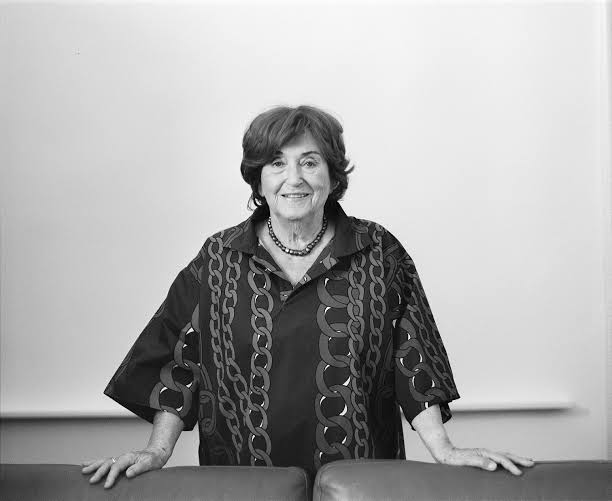
Few artists have reshaped the relationship between the female body and the camera as decisively as VALIE EXPORT. Working across performance, film, photography and media art since the late 1960s, the Austrian artist born Waltraud Lehner dismantled the conventions of spectatorship that had long positioned women as objects rather than agents of representation. For collectors and connoisseurs of post-war European art, her practice offers a rare case study in how conceptual rigour, feminist theory and radical self-fashioning converge within a single, enduring body of work.
This article traces EXPORT's biographical origins, the evolution of her career across five decades, the thematic preoccupations that unify her diverse media, and the performances that secured her reputation as one of the most consequential artists to emerge from post-war Austria. It closes with reflections relevant to those building or refining collections that engage with performance-based and photographic practice.
Biographical Background and the Making of a Name
VALIE EXPORT was born Waltraud Lehner on 17 May 1940 in Linz, Austria, a city that would later become central to the preservation of her archive and legacy. She came of age in a conservative, Catholic and patriarchal post-war Austrian society still reckoning, often inadequately, with its Nazi past. This cultural climate, restrictive in its expectations of women, would come to inform the entire trajectory of her artistic project.
Lehner's early training was in textile and fashion-related education in Vienna, a background that gave her a working knowledge of material, surface and the body as a site of construction, long before these became central concerns of her art. During the 1960s she moved into film-related work, including script development and editing, which exposed her to the apparatus of cinema from the inside, knowledge she would later turn against the medium's own conventions.
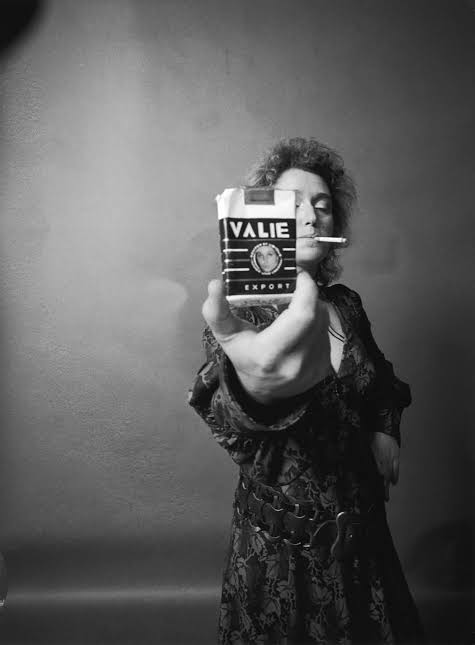
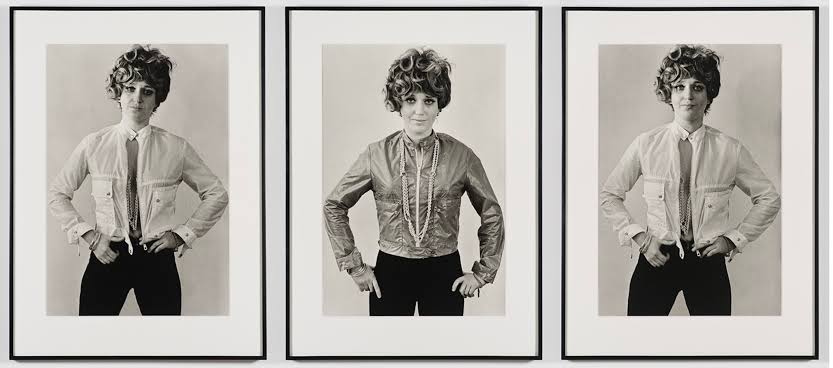
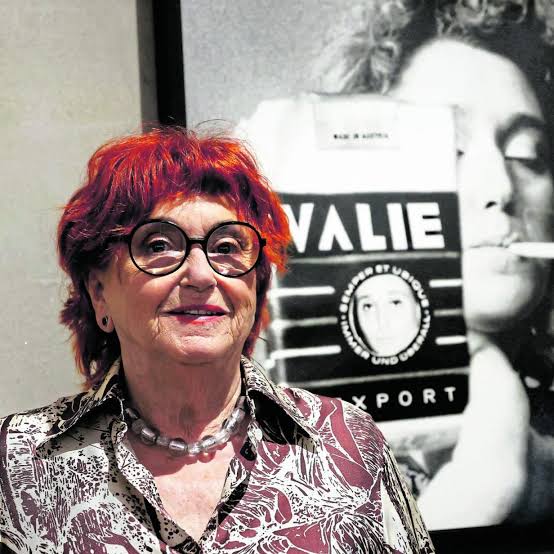
Her early adult life included a marriage, under the surname Höllinger, and the birth of a daughter, Perta, around 1960. The marriage later ended. In 1967, in an act that fused personal reinvention with conceptual art practice, she renamed herself VALIE EXPORT, always rendered in capital letters as a kind of registered artistic trademark. The name deliberately discarded both her father's surname and that of her former husband, severing her public identity from patrilineal inheritance. "Export" drew on the Smart Export cigarette brand; she adopted an advertising-style self-portrait, cigarette in hand, that mimicked the visual rhetoric of commercial branding. The gesture was not merely provocative but theoretically pointed: it asked what it might mean for a woman to brand herself, to become both subject and product of her own image, on her own terms.
This act of self-naming is inseparable from her artistic project. For a collector encountering her work for the first time, understanding the name as a deliberate, trademarked construction rather than a biographical footnote is essential to reading everything that follows.
Career Evolution Across Five Decades
EXPORT's career does not move through a single, linear development but through distinct, overlapping phases, each responding to the artistic and political climate of its moment.
The Expanded Cinema and Street Actions of the Late 1960s
EXPORT's earliest mature work emerged from her engagement with expanded cinema, a movement that sought to break film out of the darkened auditorium and the fixed relationship between screen and passive viewer. Alongside the Austrian artist, theorist and curator Peter Weibel, with whom she maintained a long creative and intellectual partnership, EXPORT staged interventions that treated cinema as a live, public and participatory event rather than a sealed spectacle. This period situates her work in dialogue with, and often in direct opposition to, Vienna Actionism, the movement associated with Günter Brus, Otto Muehl, Hermann Nitsch and Rudolf Schwarzkogler, whose ritualistic performances centred the male body as an instrument of sacrifice and transgression. EXPORT's early actions can be read as a feminist counter-proposal: where the Actionists made the male body a vehicle for violence, EXPORT insisted on the female body as an active, speaking subject of representation, not its passive object.
Body-Centred Performance, Photography and Video in the 1970s
The 1970s mark the richest and most theoretically dense phase of her career, during which EXPORT produced the body of performance, photographic and video work for which she remains best known. This decade saw her develop a sustained critique of how public space, media technology and social convention inscribe themselves upon the female body. It was also during this period that she curated the landmark 1975 Salzburg exhibition MAGNA: Feminism: Art and Creativity and authored the 1973 manifesto "Women's Art: A Manifesto," cementing her position as both practitioner and theorist within the emerging feminist art movement.
Feature Films and Theoretical Writing in the Late 1970s and 1980s
EXPORT extended her media-critical concerns into feature filmmaking, directing works including Invisible Adversaries (Unsichtbare Gegner, 1977), in which a photographer protagonist named Anna comes to believe that invisible beings are infiltrating and replacing members of society, a narrative that fuses feminist anxiety with media paranoia. Syntagma (1983) examined the relationship between body, language and cinematic structure, while Menschenfrauen (1979) and The Practice of Love (Die Praxis der Liebe, 1985) continued her exploration of gendered subjectivity through narrative cinema. Throughout this period, she also produced significant theoretical writing, positioning her among a small number of artists whose critical texts carry weight equal to their visual output
Institutional Recognition, Teaching and Later Work from the 1990s Onward
From the 1990s, EXPORT's practice broadened to include sculpture, installation and large-scale multimedia work, alongside growing institutional recognition. She held a professorship at the Academy of Media Arts Cologne from the mid-1990s into the mid-2000s, along with visiting positions in the United States, shaping a generation of younger media artists. Her work has been exhibited at major international venues, including documenta exhibitions in Kassel, and she has received state and international honours over the course of her career, though collectors seeking precise dates and citation details should consult current institutional and museum records, as award chronologies continue to be updated. Her connection to Linz remains central to her legacy: the city's Lentos Kunstmuseum and the VALIE EXPORT Centre Linz, a research centre founded in 2007, together anchor the scholarly and archival infrastructure around her work.
Thematic Concerns: The Body as Contested Territory
Across every medium EXPORT has worked in, a consistent set of thematic concerns recurs, each addressing how the female body is constructed, surveilled and constrained by social, architectural and media systems.
Reclaiming the Gaze
EXPORT's work is frequently discussed alongside Laura Mulvey's influential 1975 essay "Visual Pleasure and Narrative Cinema," which theorised the cinematic "male gaze" as a structuring force in mainstream film. EXPORT arrived at parallel conclusions through practice rather than theory, staging performances in which the female body refuses to remain a passive object of looking and instead directs, interrupts or weaponises the act of viewing itself.
The Body in Public and Architectural Space
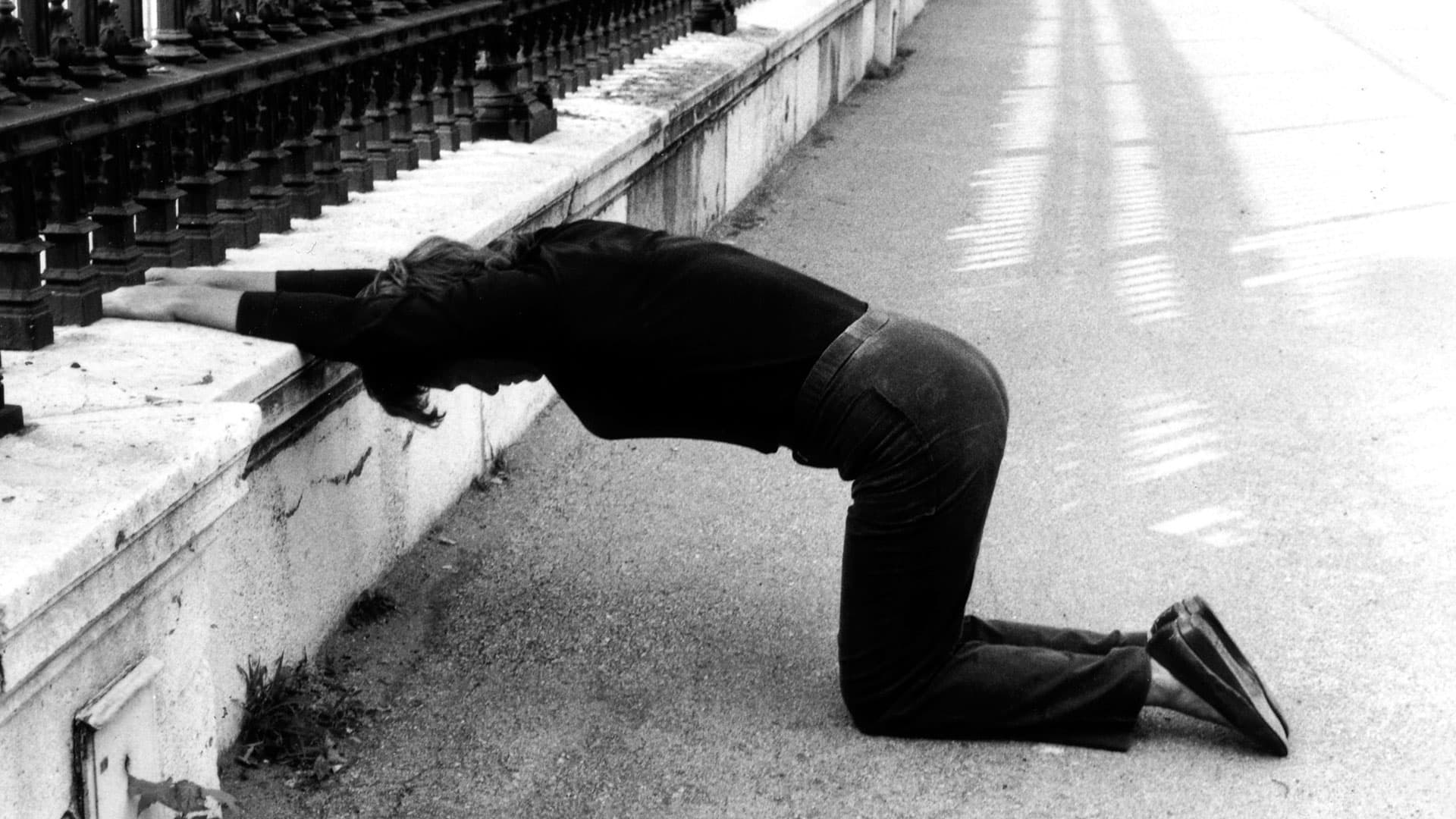
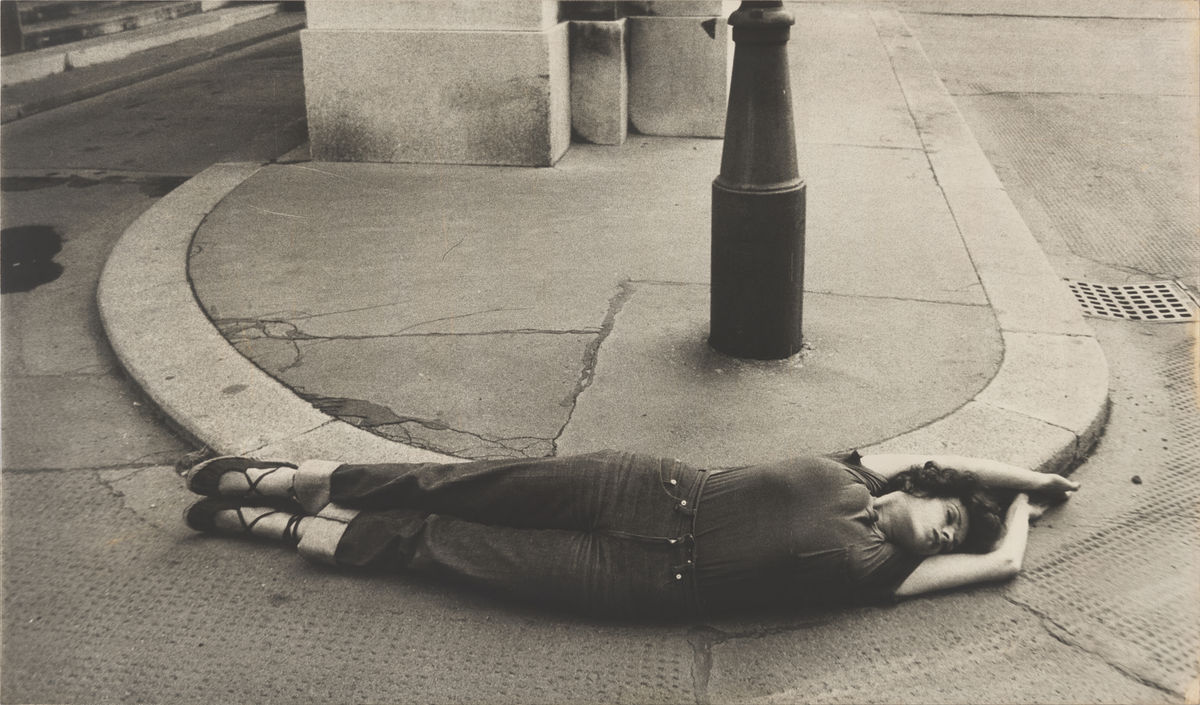
A recurring preoccupation is the relationship between the female body and the built environment. EXPORT repeatedly staged her own body against curbs, walls, steps and corners, treating architecture not as a neutral backdrop but as an active force that shapes, confines and defines the body occupying it.
Media, Surveillance and Alienation
EXPORT's engagement with television, film and emerging video technologies positioned the media apparatus itself as a subject of critique. Her works frequently stage situations in which the act of being watched, recorded or broadcast becomes a metaphor for the social surveillance of women's bodies and behaviour.
The Body as Inscribed Surface
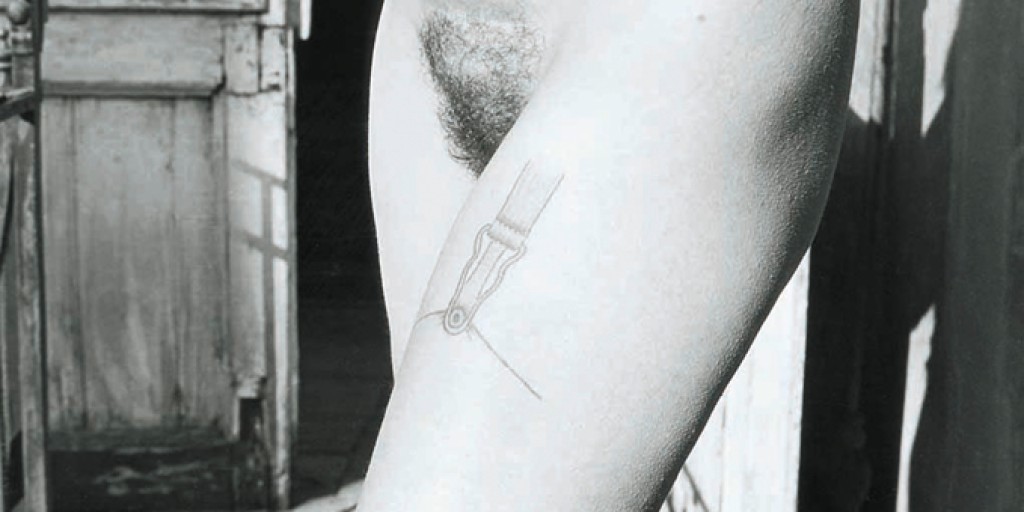
Several of EXPORT's works treat the body quite literally as a surface marked by social convention, exploring how codes of femininity are not innate but applied, almost like text written onto skin.
Notable Performances and Key Works
Tap and Touch Cinema (1968)
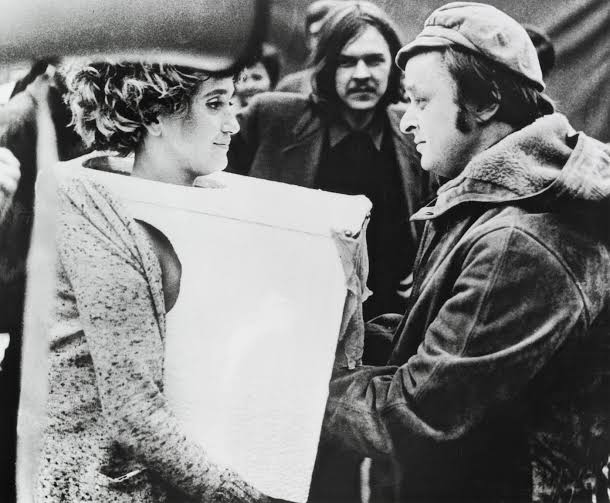
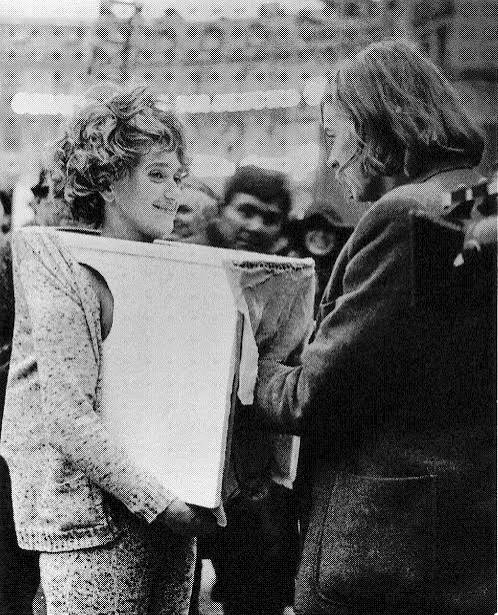
In Tap and Touch Cinema (Tapp- und Tastkino), EXPORT wore a small curtained box over her bare chest and walked through public streets in Vienna, later performing the piece at the Munich Expanded Cinema festival and elsewhere, with Peter Weibel acting as a barker inviting passers-by to reach through the curtain and touch her for approximately thirty-three seconds. The work inverted the conventions of cinema entirely: there was no screen, no distance and no safety of anonymous spectatorship. The audience could touch but not look, a reversal that exposed the usually one-directional power of the cinematic gaze and relocated the "film" into direct, consensual, bodily contact in public space.
Action Pants: Genital Panic (1969)
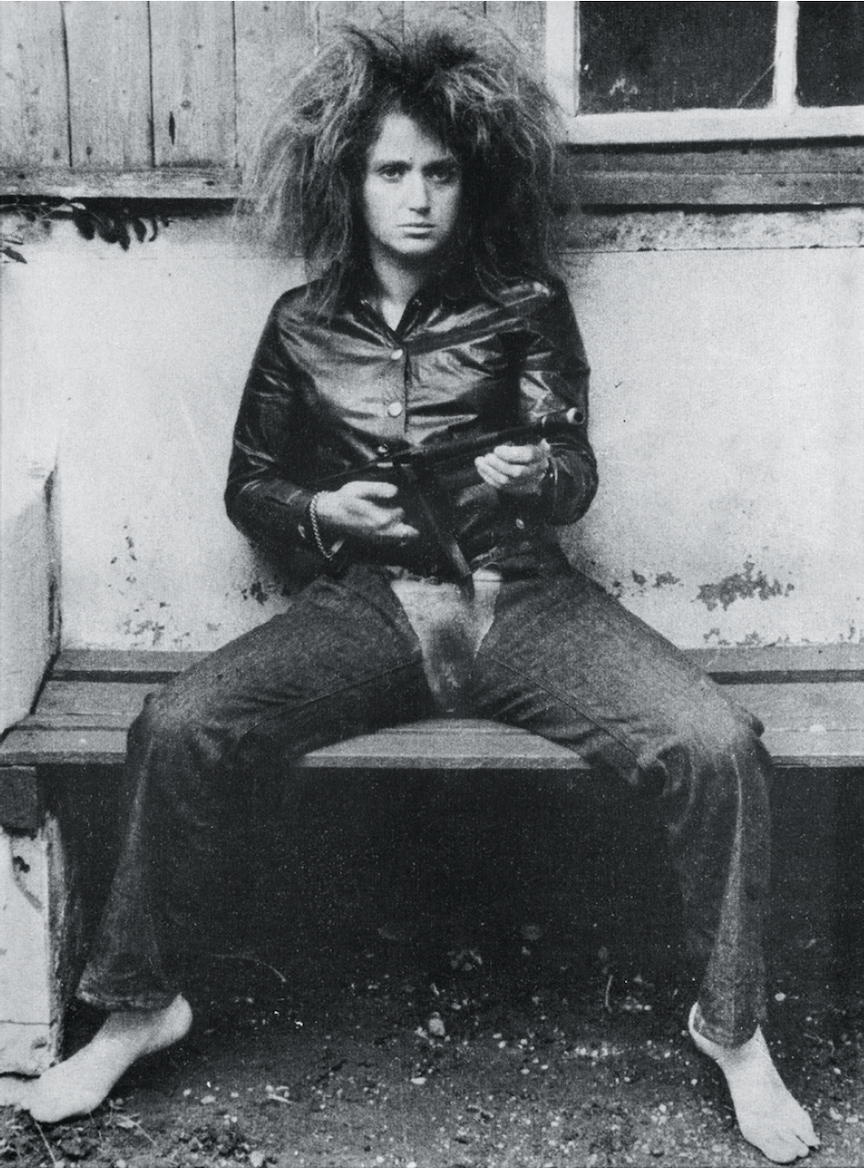
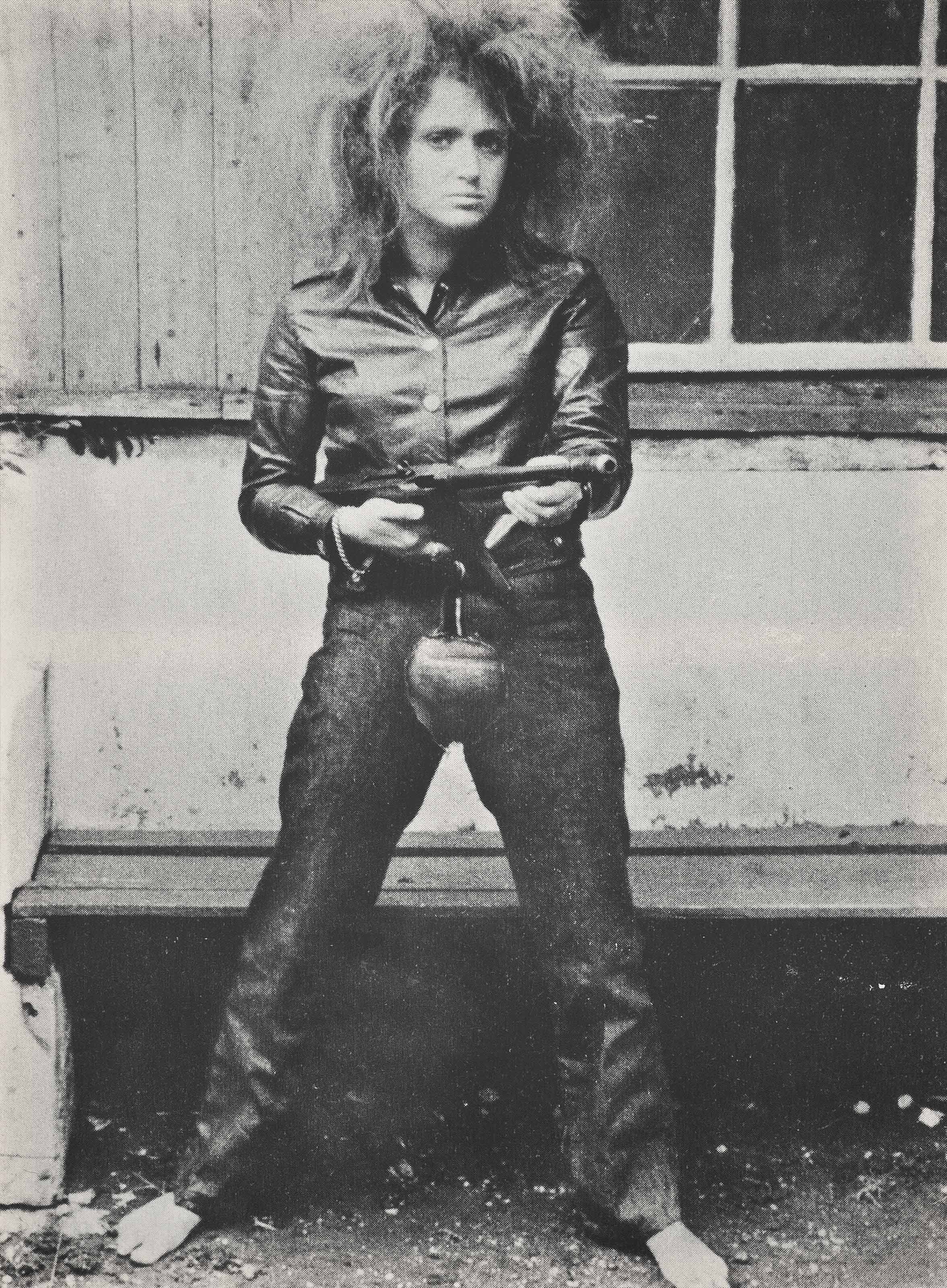
Aktionshose: Genitalpanik remains EXPORT's most widely circulated image, built around an iconic photographic poster showing the artist seated with teased hair, crotchless trousers and a machine gun positioned at her lap. The work is associated with a reported performance in a Munich art-house cinema in which EXPORT is said to have walked among the audience in this costume, confronting cinema-goers with an aggressive embodiment of female sexuality as both exposure and threat. It is worth noting, for those researching the piece in depth, that documentation of the original live event is thin, and that the legend surrounding the performance has, over time, become difficult to separate from the photographic poster that now stands as its primary record. Scholars increasingly treat the event as a debated reconstruction rather than a fully documented happening, a caution collectors and researchers should bear in mind when encountering later accounts.
Body Sign Action (1970)
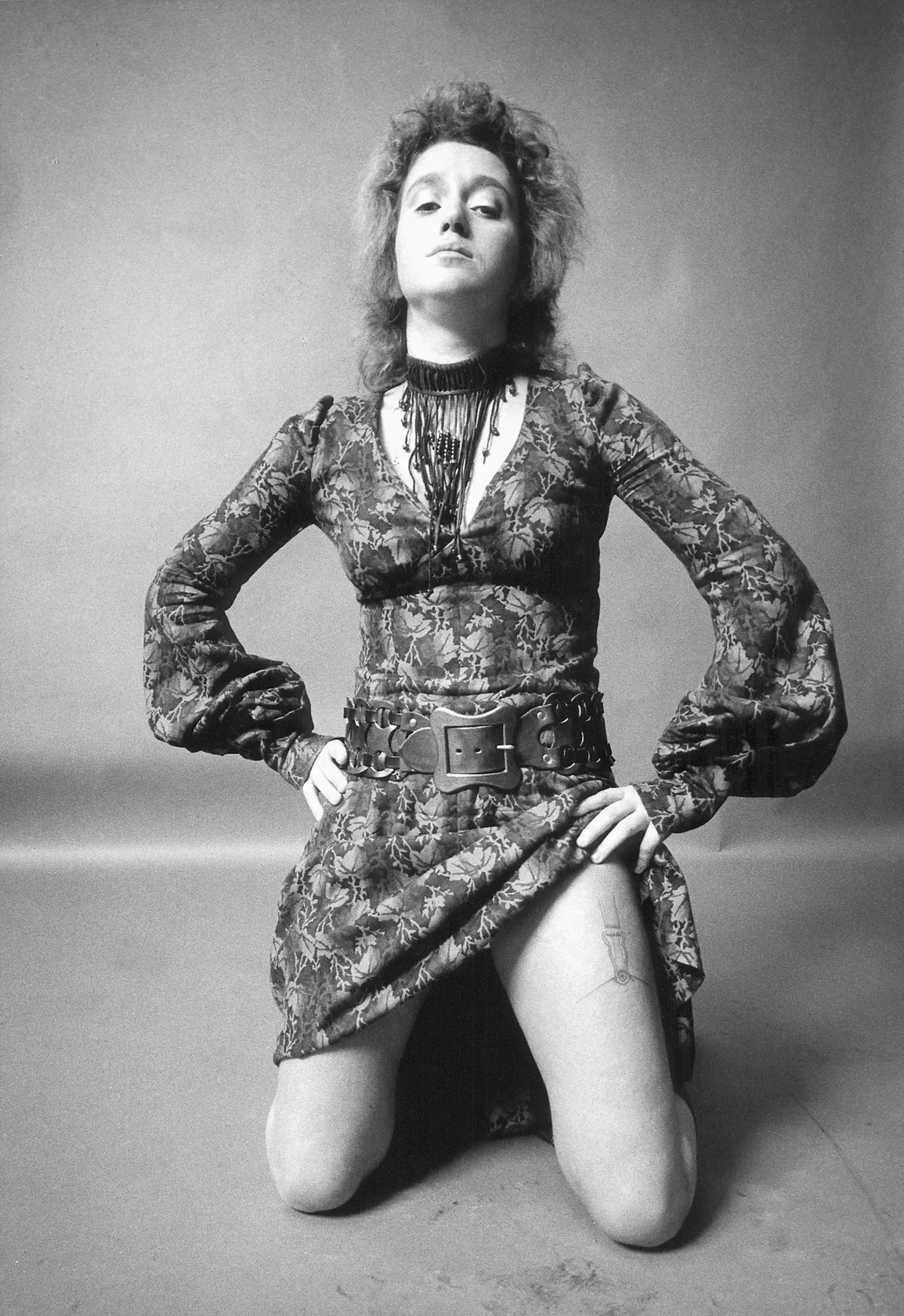
In Body Sign Action, EXPORT had a garter tattooed onto her thigh, a literal inscription of a symbol of feminine undergarment convention directly onto flesh, collapsing the distance between social code and bodily reality.
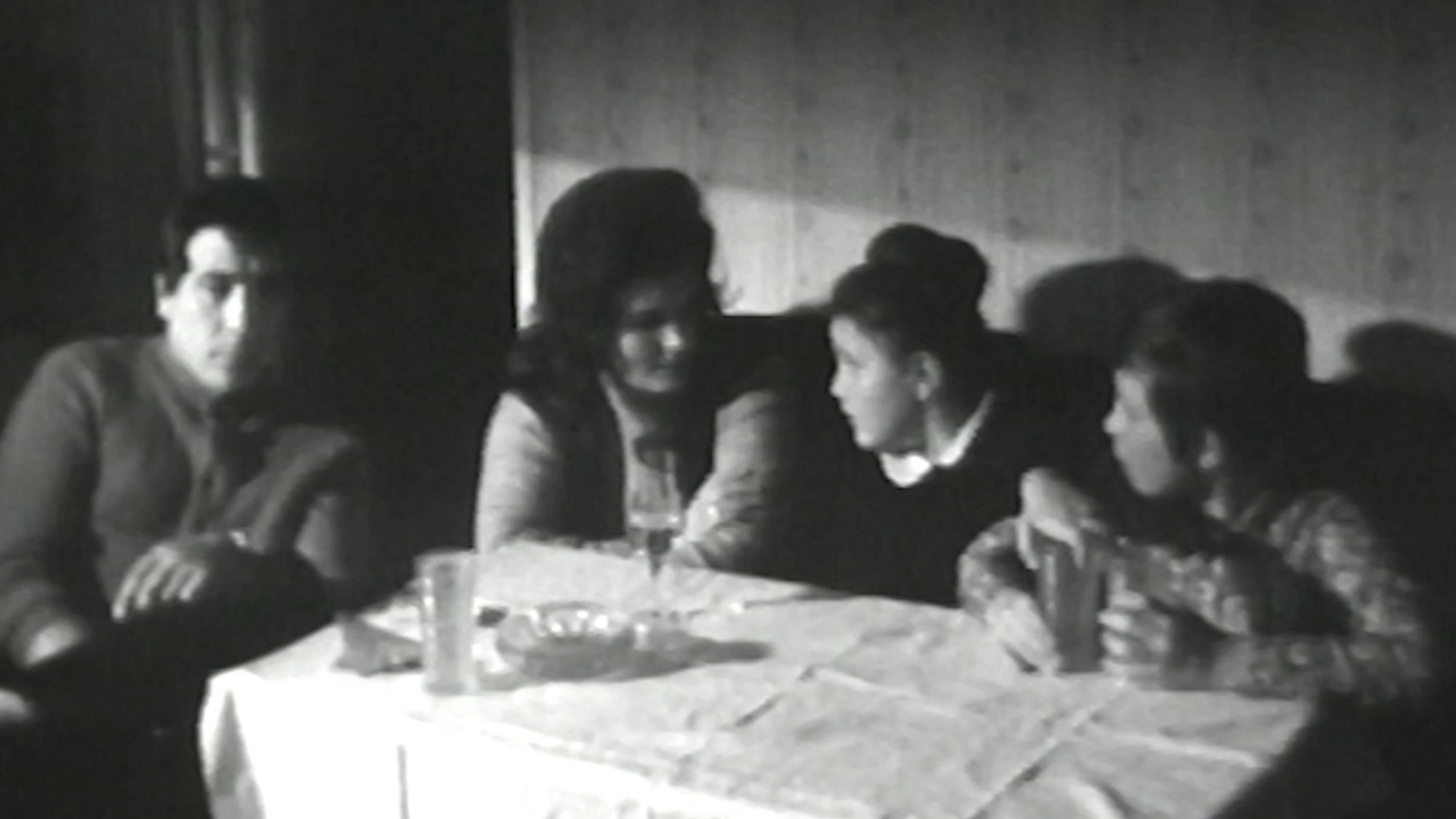
Facing a Family (1971)
Broadcast on Austrian state television, Facing a Family showed a family seated in front of their own television set, which the broadcast viewer at home also watched, creating a recursive structure of mutual observation that implicated the domestic viewer in the very apparatus of surveillance EXPORT sought to expose.
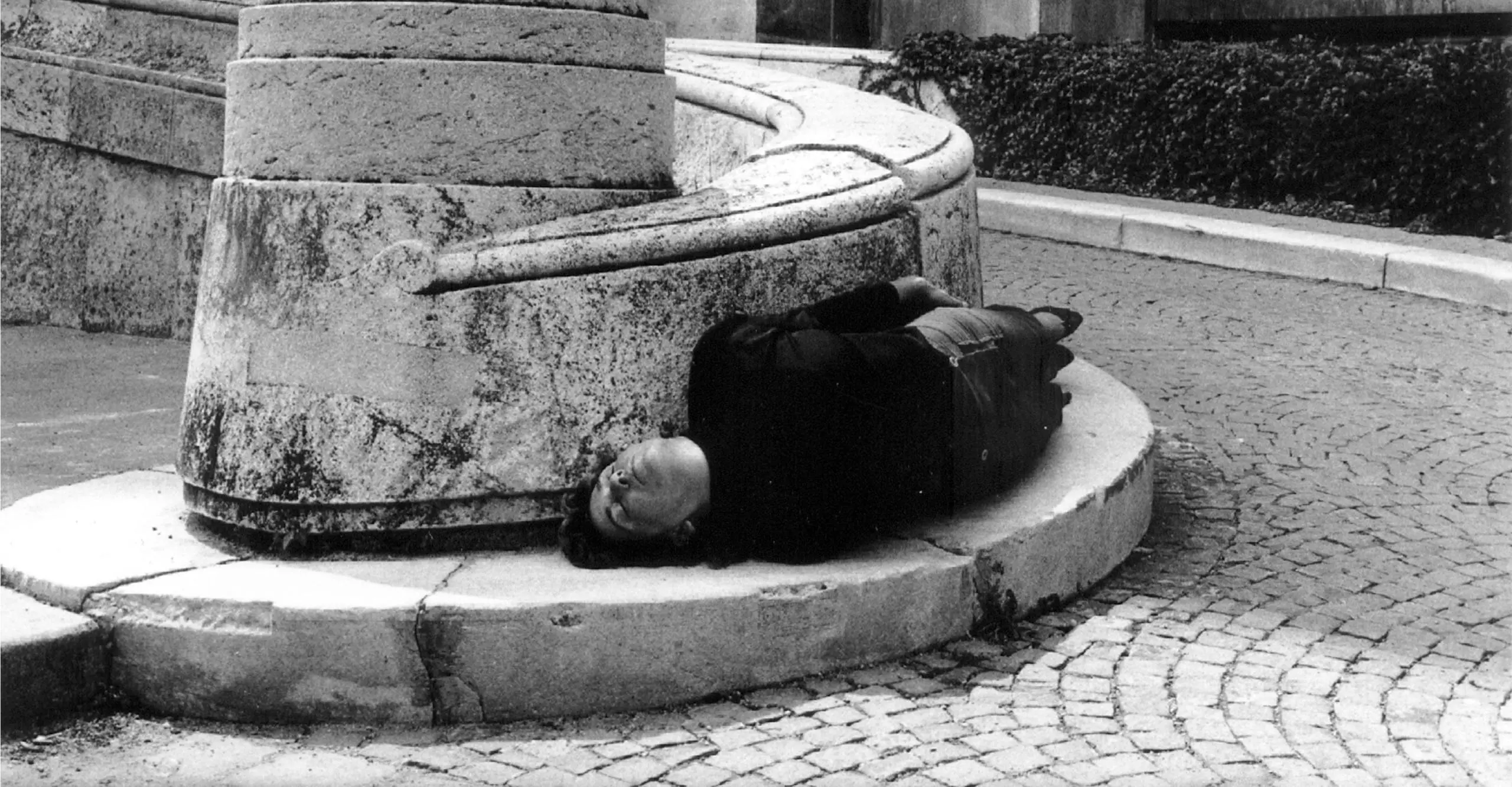
Body Configurations (1972–1976)
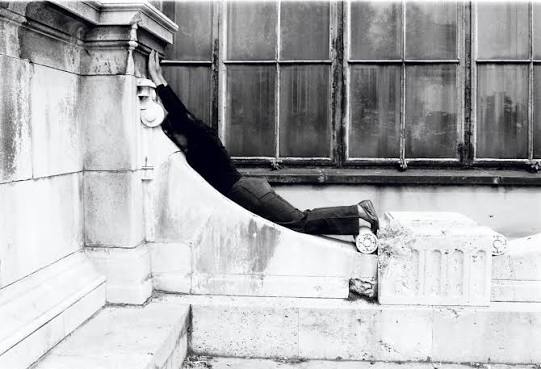
In this extended photographic series, EXPORT fitted her own body into the contours of urban architecture, pressing herself against curbs, corners and walls to demonstrate how public space physically and symbolically constrains the body that moves through it.
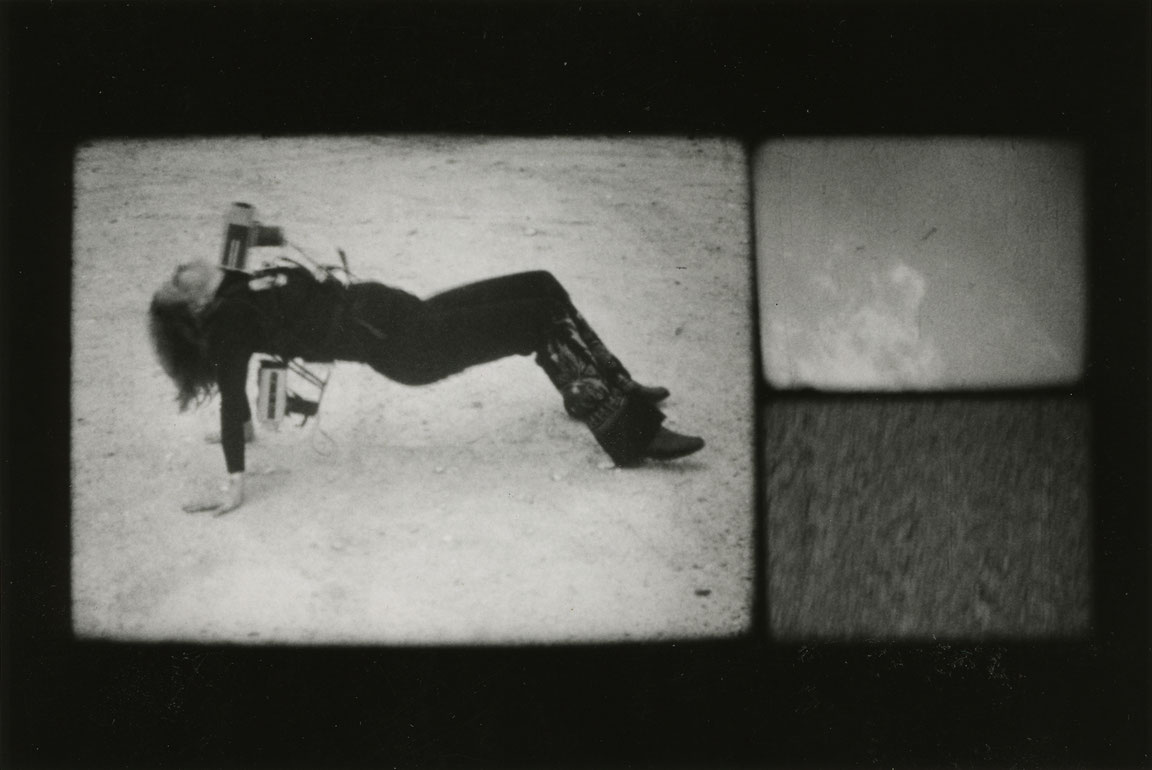
Adjunct Dislocations (1973)
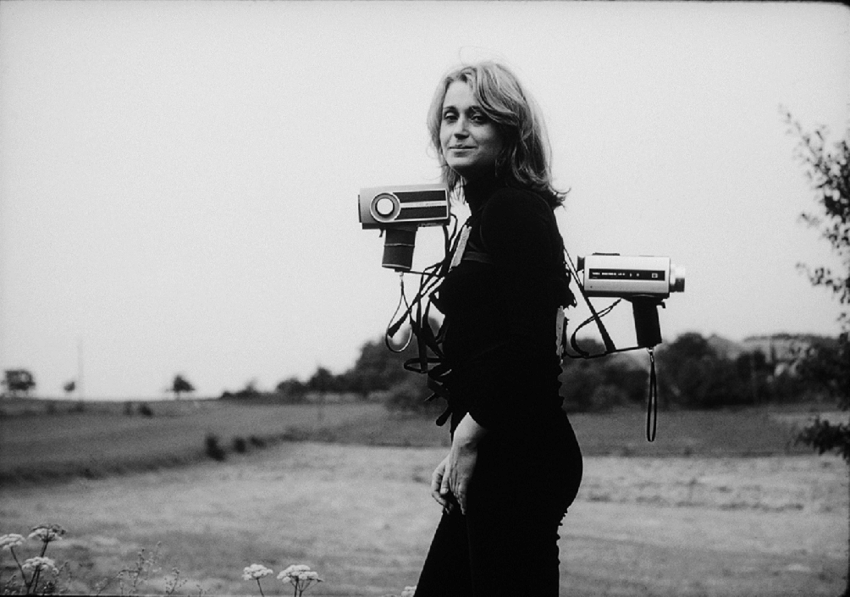
For Adjungierte Dislokationen, EXPORT strapped cameras to the front and back of her body and walked, producing a dislocated, doubled record of space that denied any single, stable viewpoint, a technical gesture mirroring her broader interest in fractured perception.
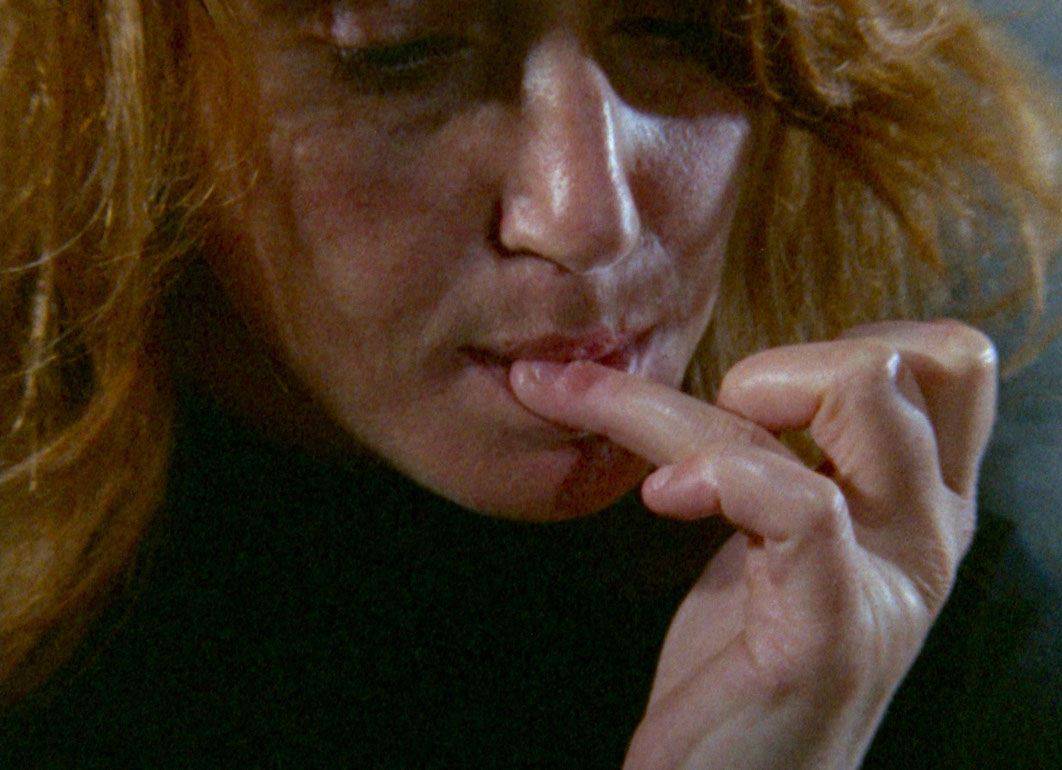
Remote, Remote (1973)
In this unsettling film and performance work, EXPORT is shown cutting her own cuticles, an act whose escalating, abstracted violence is conveyed at a remove, contributing to her sustained critique of mediated perception and emotional distance.

Insights Into the Artist's Personal Life
EXPORT's personal and professional life were never fully separable, a fact she made explicit through the very act of renaming herself. Her early marriage and motherhood situated her within the conventional domestic expectations of post-war Austrian womanhood before her 1967 self-renaming publicly severed that inheritance. Her decades-long collaboration with Peter Weibel, who died in 2023, shaped some of her most significant early works and reflects the collaborative, interdisciplinary spirit of the Viennese avant-garde from which she emerged. Her later career as an educator, particularly during her professorship in Cologne, extended her influence beyond her own practice into the formation of subsequent generations of media artists. Throughout, her writing and curatorial work, including the MAGNA exhibition and her 1973 manifesto, demonstrate an artist equally committed to theory and practice, each informing the other.
Collecting and Preserving Performance-Based Practice
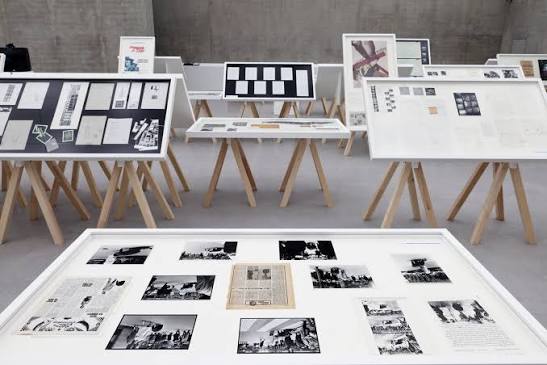
For collectors, EXPORT's oeuvre presents a distinctive set of considerations. Much of her work survives not as a singular object but as photographic documentation, film, video and printed posters, the residue of ephemeral, live events rather than durable artefacts in their own right. This raises particular questions around authentication, edition size and provenance that differ meaningfully from those governing painting or sculpture.
Those building a collection that includes performance-based or photographic work of this kind should prioritise clear documentation of edition numbers and printing history, verified provenance trails back to the artist or her estate and archive, and awareness that institutional collections, museum archives and research centres such as the VALIE EXPORT Centre Linz play an outsized role in establishing authenticity and context for this category of work. Engaging with specialist advisors familiar with performance and media art authentication is strongly recommended, as the relationship between a live event, its documentation and the collectable object is more layered here than in more traditional mediums.
A Legacy That Endured
VALIE EXPORT's career stands as a sustained argument, conducted across cinema, photography, performance and the body itself, against the passive, object-like status long assigned to women within visual culture. From the confrontational intimacy of Tap and Touch Cinema to the architectural interrogations of Body Configurations, her work demonstrated that the female body could occupy the position of author, critic and subject all at once. EXPORT passed away on 14 May 2026 in Vienna at 85; her foundation announced her death. For collectors, her practice offers not only a significant historical record of feminist art's emergence in Europe but also a case study in how conceptual rigour and radical self-fashioning produced a body of work whose relevance has only deepened in the years since. Those drawn to her legacy would do well to engage directly with institutional archives, notably in Linz, where the fullest and most carefully preserved record of her extraordinary career remains housed.