TL;DR: Jake Chapman and Dinos Chapman are British artists who have worked as a collaborative duo since the late 1980s, becoming central figures of the Young British Artists movement. Their practice interrogates violence, consumerism, and the Enlightenment ideal of human progress through sculpture, printmaking, and installation, most notably in works such as Hell, Fucking Hell, and their defaced editions of Goya's Disasters of War.
Few collaborative partnerships in contemporary British art have provoked as much critical debate as that of Jake and Dinos Chapman. Working in near-total creative unison since 1989, the brothers have built a body of work defined by its unflinching engagement with violence, mortality, and the darker undercurrents of human civilisation. Their sculptures, installations, and reworked prints refuse easy consumption; instead, they demand that viewers confront discomfort as a condition of meaning.
This article examines the Chapmans' biographical trajectory, the evolution of their collaborative practice, the thematic preoccupations that define their oeuvre, and several of their most consequential projects. The aim is to offer a rigorous, analytical account of two artists whose work continues to occupy a contested yet undeniably significant position within contemporary art history.
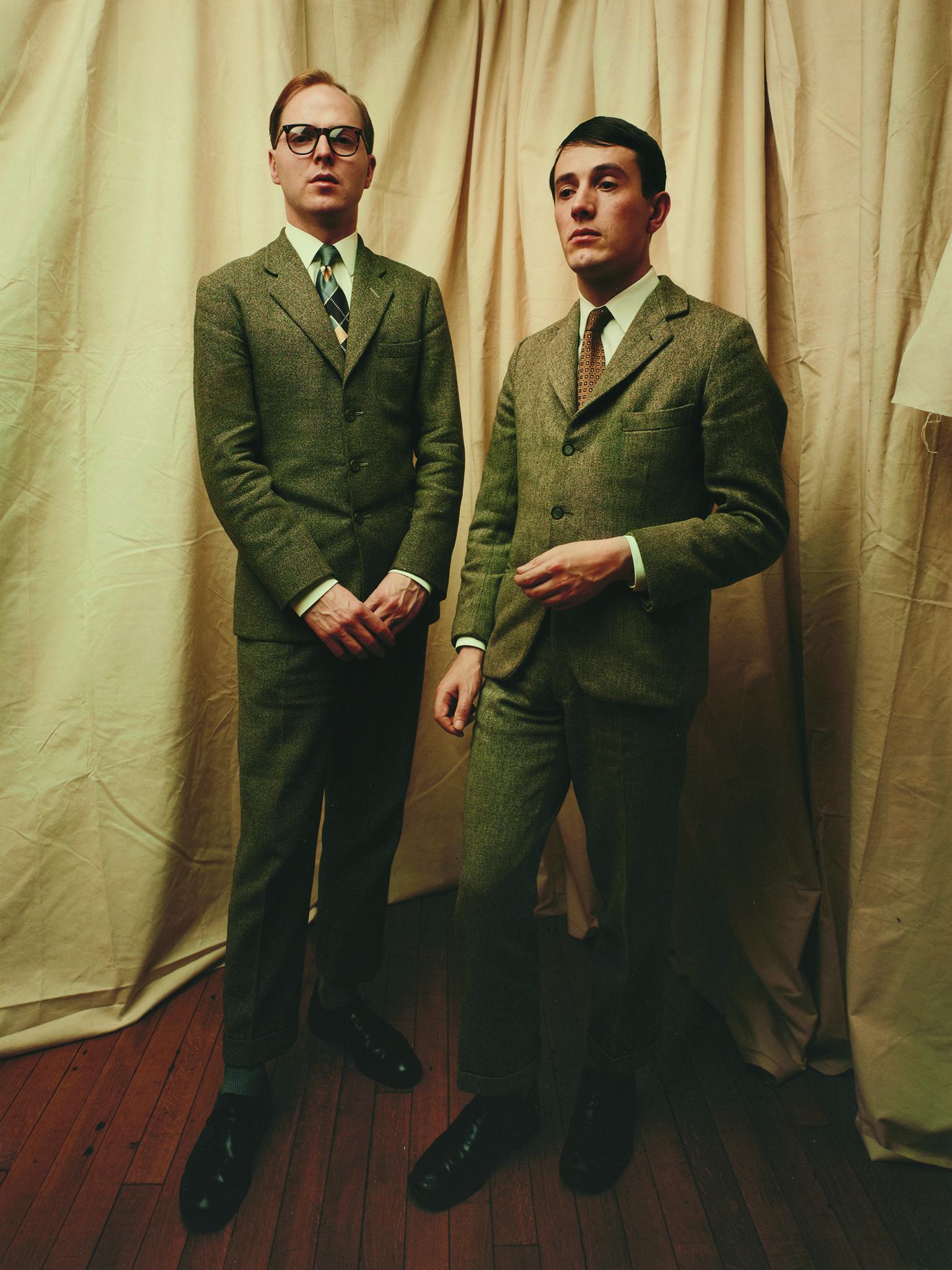
Who Are Jake and Dinos Chapman?
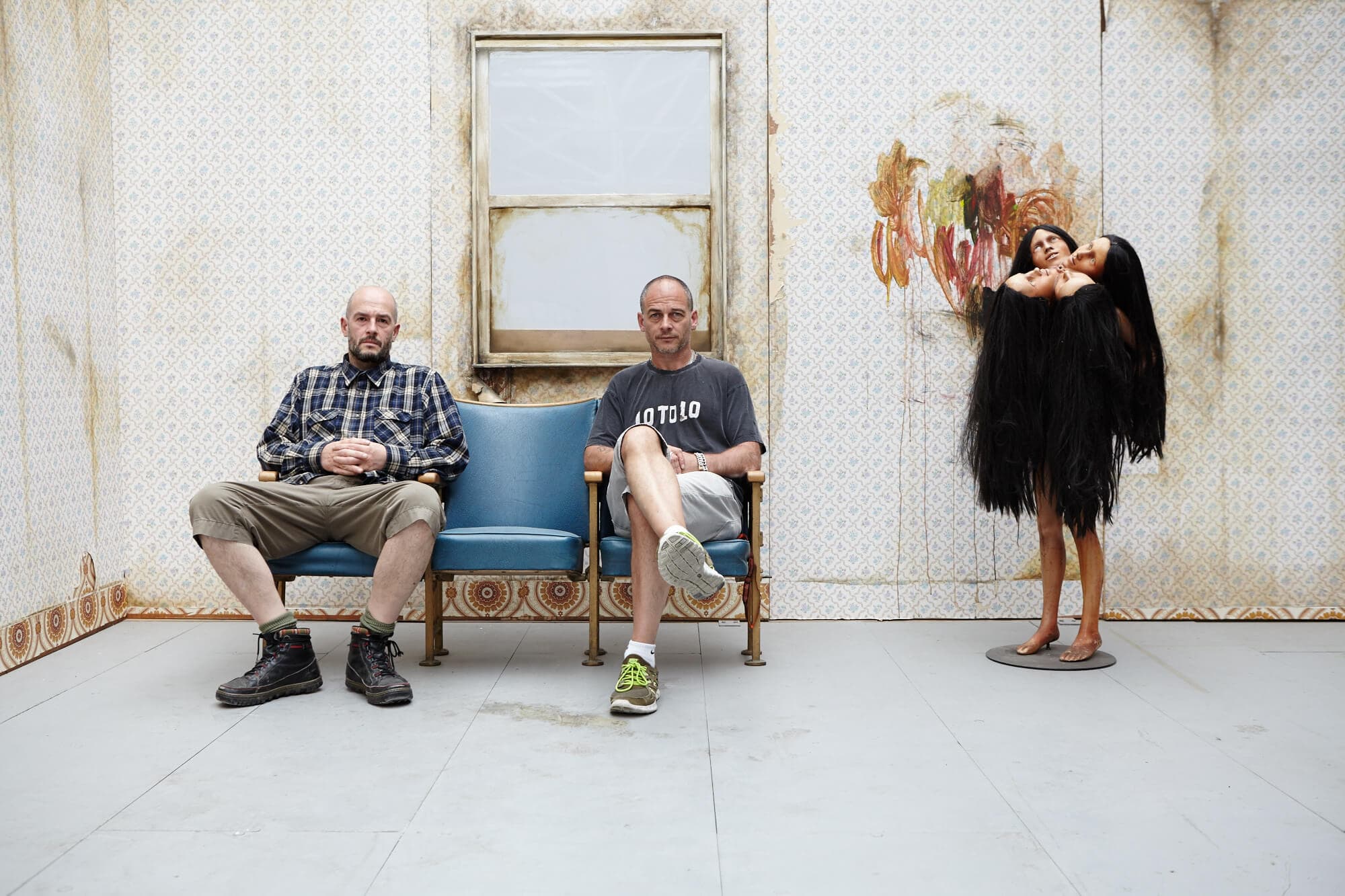
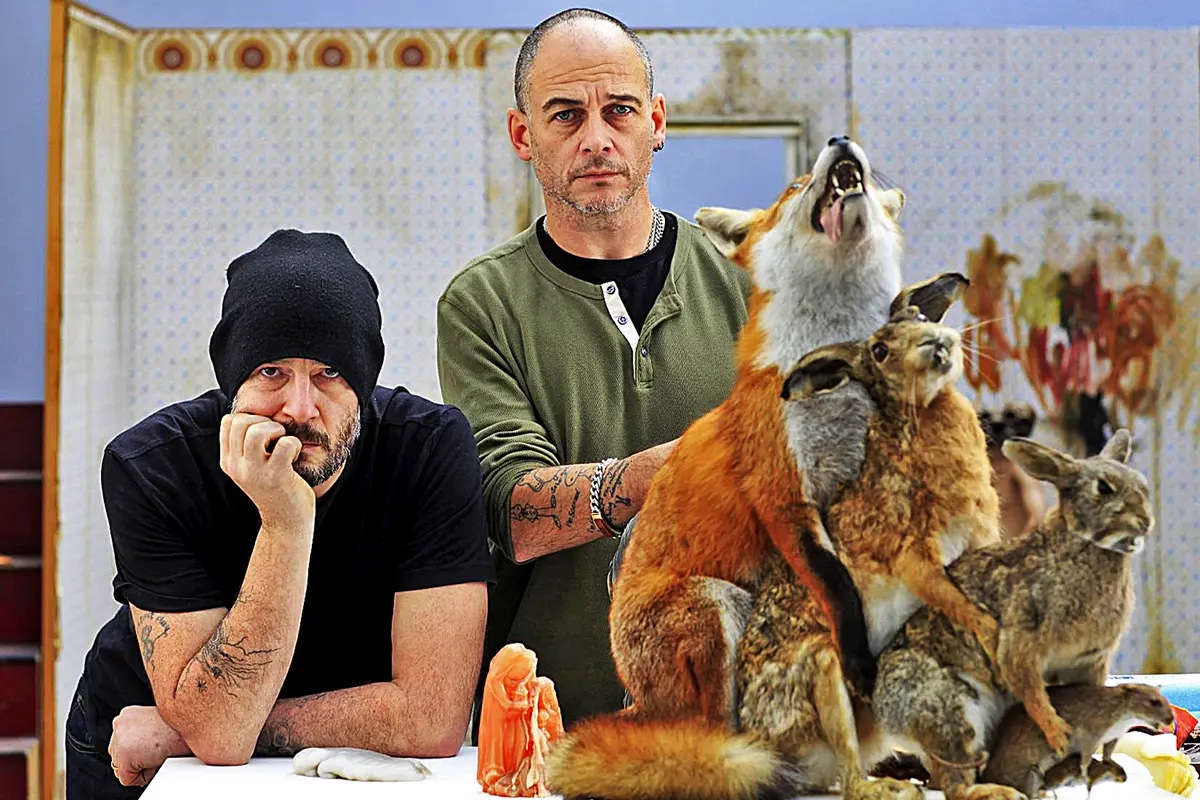
Dinos Chapman, the elder of the two, was born in London in 1962, while Jake Chapman was born in Cheltenham in 1966. Both brothers studied art formally in London: Jake at the Royal College of Art and the Ravensbourne College of Design and Communication, and Dinos at the Royal College of Art following earlier training at the North East London Polytechnic. Before establishing their independent practice, both worked as studio assistants to the artist duo Gilbert & George, an experience that exposed them early to collaborative authorship and the performative possibilities of artistic identity.
The Chapmans began working together formally from 1989 onward, deliberately dissolving the boundary between individual authorship that typically defines the romantic image of the solitary artistic genius. This collaborative model is not incidental to their practice; it is foundational to it. By presenting themselves as a single creative entity, the brothers challenge inherited assumptions about originality, authorship, and the cult of individual genius that has shaped Western art history since the Renaissance.
How Did the Chapman Brothers' Career Evolve?

The Young British Artists and the Saatchi Era
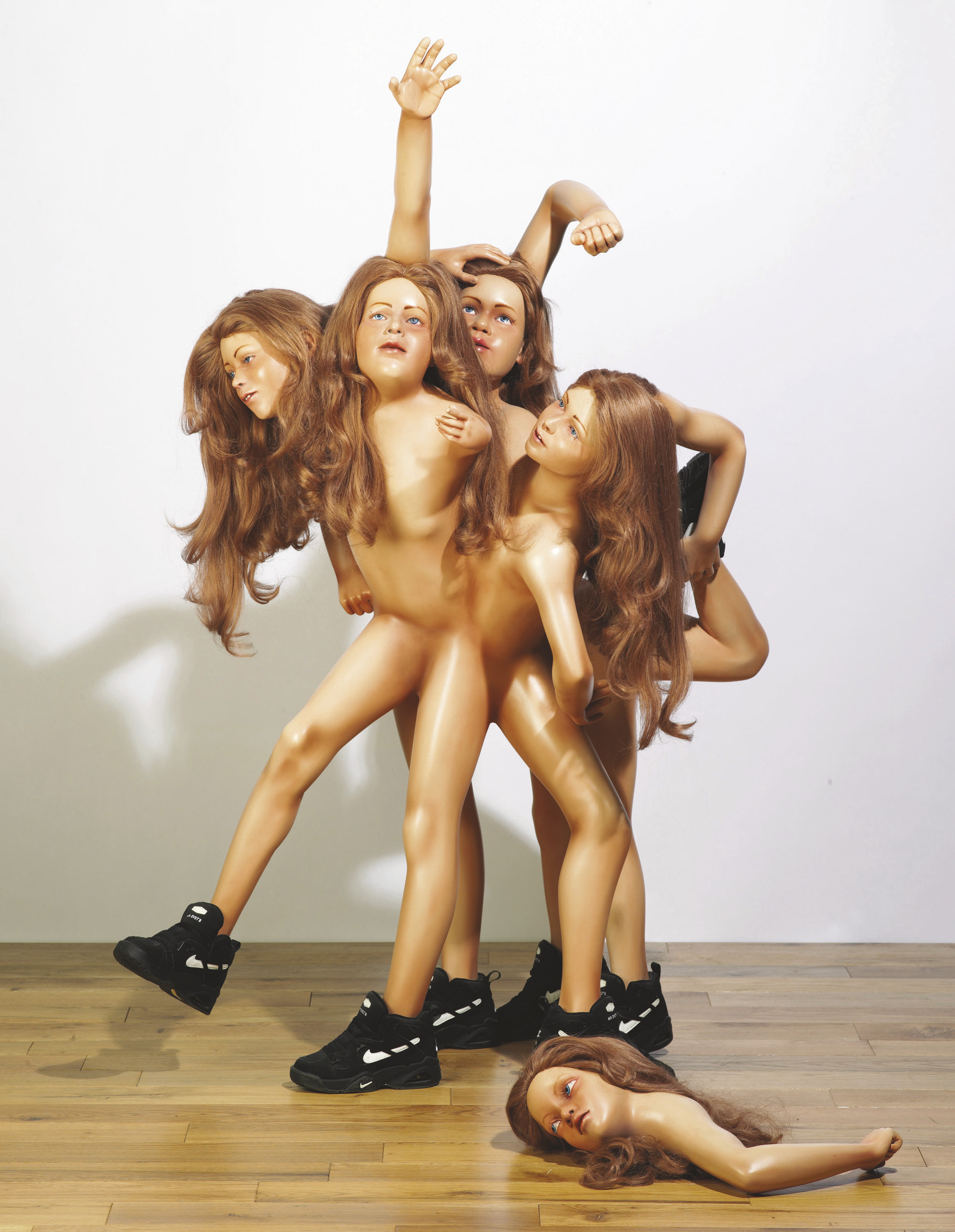
The Chapmans emerged as part of the Young British Artists (YBA), a loosely affiliated cohort of London-based artists who rose to prominence in the late 1980s and 1990s, substantially supported by the patronage and collecting practices of advertising magnate Charles Saatchi. Their early sculptural work, including figures assembled from mannequin parts, aligned them with the YBA's broader appetite for confrontational, often visceral imagery that rejected the decorum of previous generations of British art.
The brothers achieved significant visibility through their inclusion in Sensation, the landmark 1997 exhibition at the Royal Academy of Arts that showcased work from the Saatchi Collection and brought the YBA movement firmly into mainstream public consciousness, generating both critical acclaim and considerable controversy.
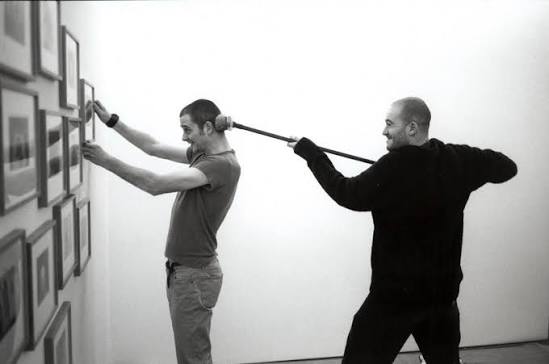
Institutional Recognition and Critical Standing
By the early 2000s, the Chapmans had secured a firm position within the British contemporary art establishment, culminating in a nomination for the Turner Prize in 2003. This recognition, however, did little to soften the provocations of their work; if anything, institutional validation seemed to embolden further transgression, as subsequent projects pushed even further into contested ethical and aesthetic territory.
Throughout the 2000s and into the following decades, the Chapmans expanded their practice across media, producing not only sculpture but also printmaking, drawing, and large-scale installation, while maintaining the collaborative structure that has defined their partnership from the outset.
What Themes Define the Chapmans' Oeuvre?
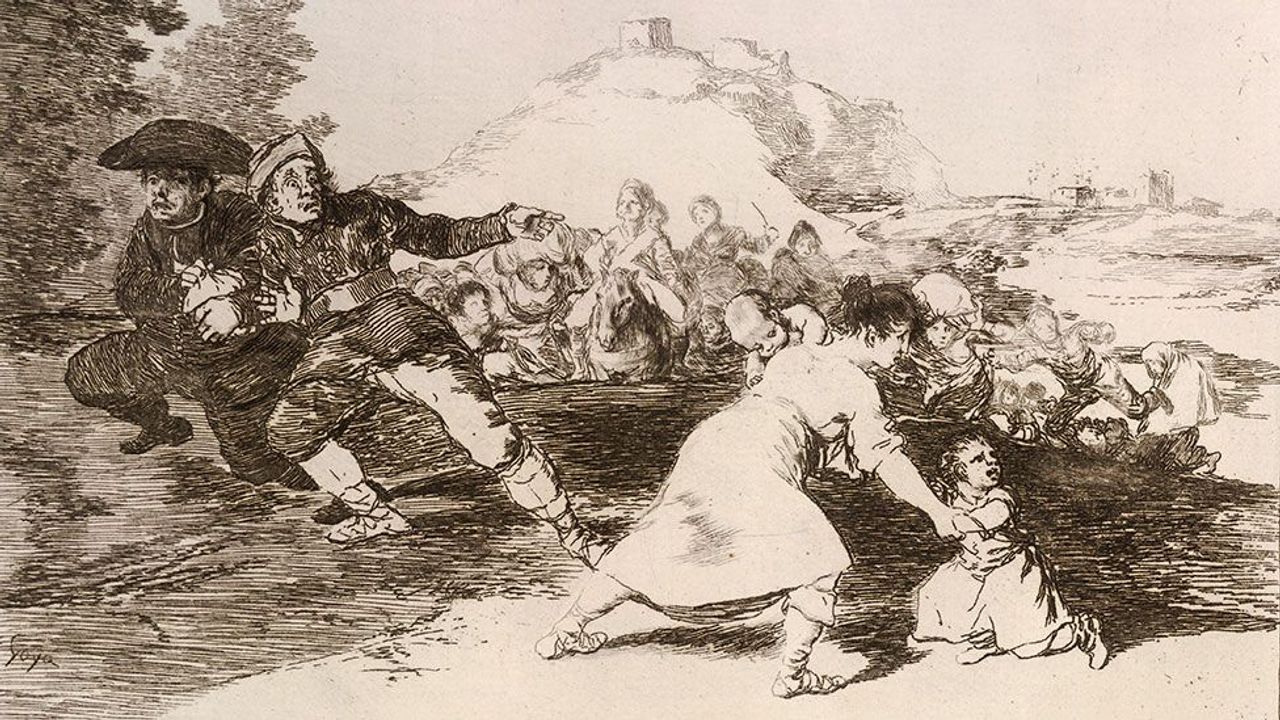
Violence, Atrocity, and the Failure of Enlightenment Reason
A central preoccupation throughout the Chapmans' work is a sustained critique of Enlightenment rationalism and its failure to prevent the atrocities of the twentieth century. Their engagement with Francisco Goya's Disasters of War, a series of etchings depicting the horrors of the Peninsular War, exemplifies this concern. Rather than simply referencing Goya, the brothers have repeatedly reworked and reinterpreted his imagery, using it as a vehicle to interrogate the persistence of violence within supposedly civilised societies.
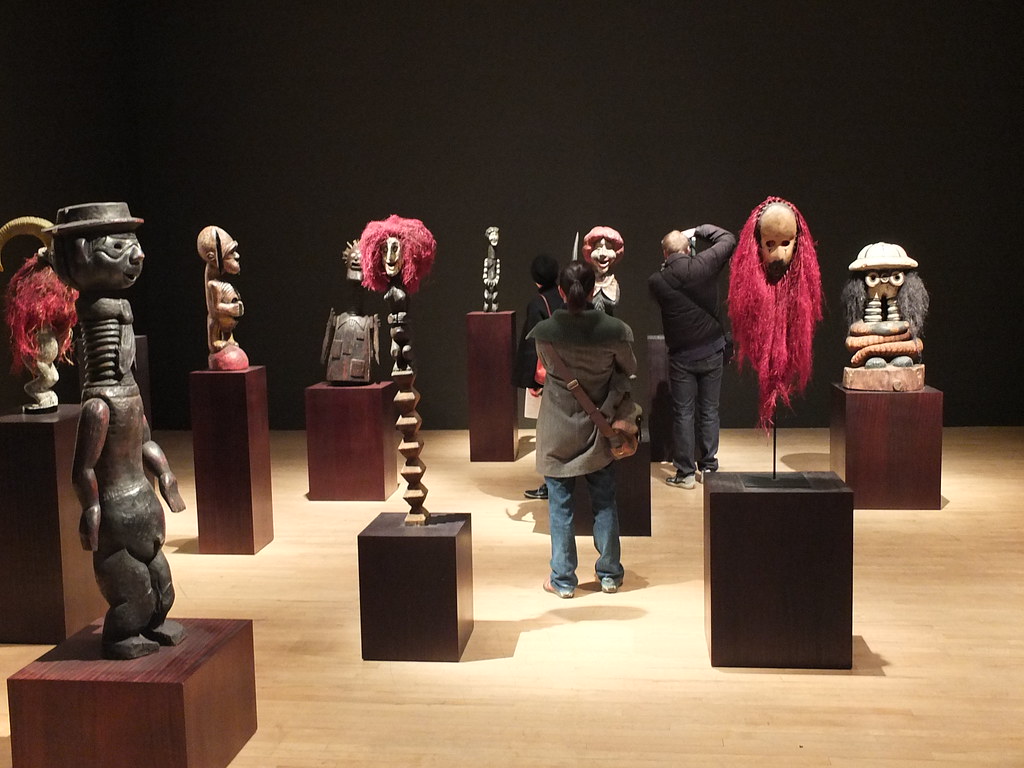
Consumerism and Corporate Iconography
The Chapmans frequently juxtapose imagery of historical atrocity with symbols of contemporary consumer capitalism, suggesting continuities between colonial violence and modern commercial culture. Their Chapman Family Collection (2002), a body of invented ethnographic artefacts incorporating corporate branding elements evocative of fast-food culture, exemplifies this strategy. By presenting fabricated "primitive" objects within the visual grammar of museum ethnography, the work interrogates the colonial histories embedded within Western collecting practices while simultaneously critiquing the global reach of consumer branding.
Childhood, Mutation, and Disturbed Innocence
Another recurring motif in the Chapmans' sculptural practice involves child-like mannequin figures rendered with disturbing mutations and rearranged anatomical features. These works deliberately subvert conventional associations between childhood and innocence, instead presenting the child figure as a site of grotesque transformation. This strategy aligns with the broader surrealist and Bataillean influences evident throughout their practice, drawing on traditions that privilege transgression and the abject as tools for confronting repressed cultural anxieties.
The Most Notable Works of the Chapmans
Hell and Fucking Hell
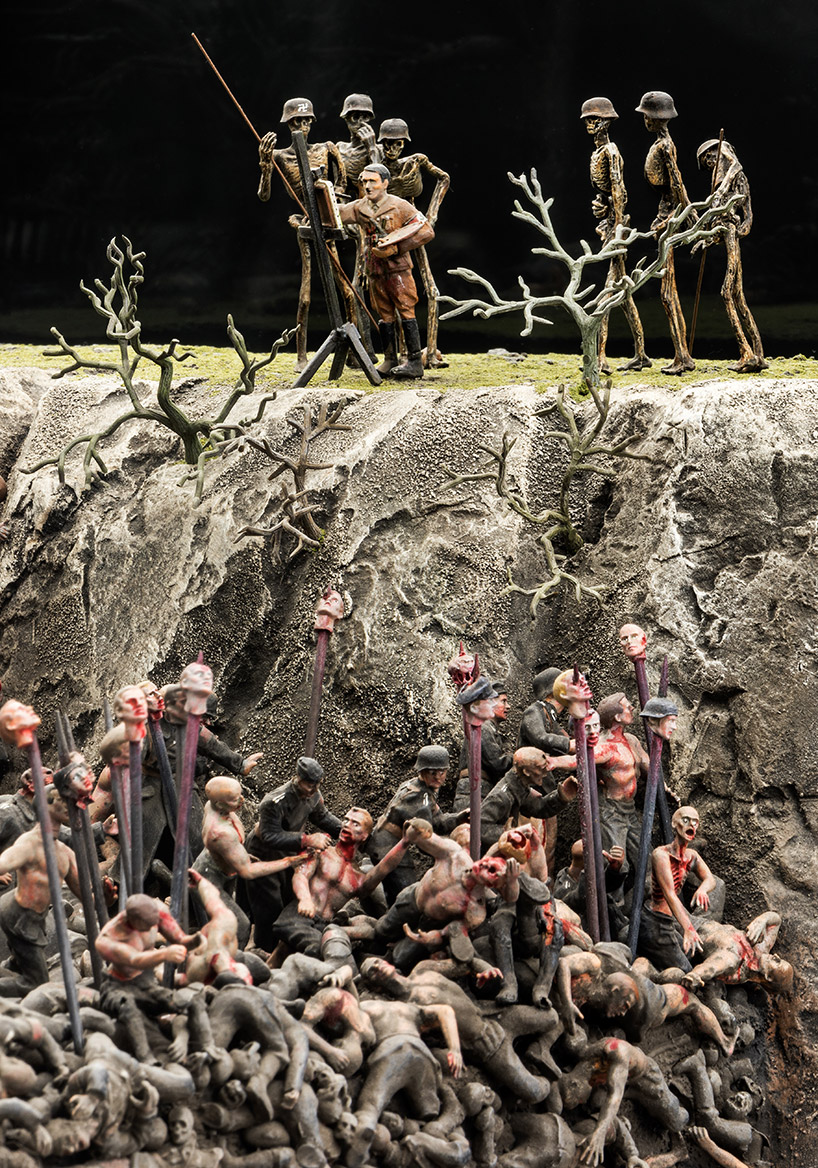
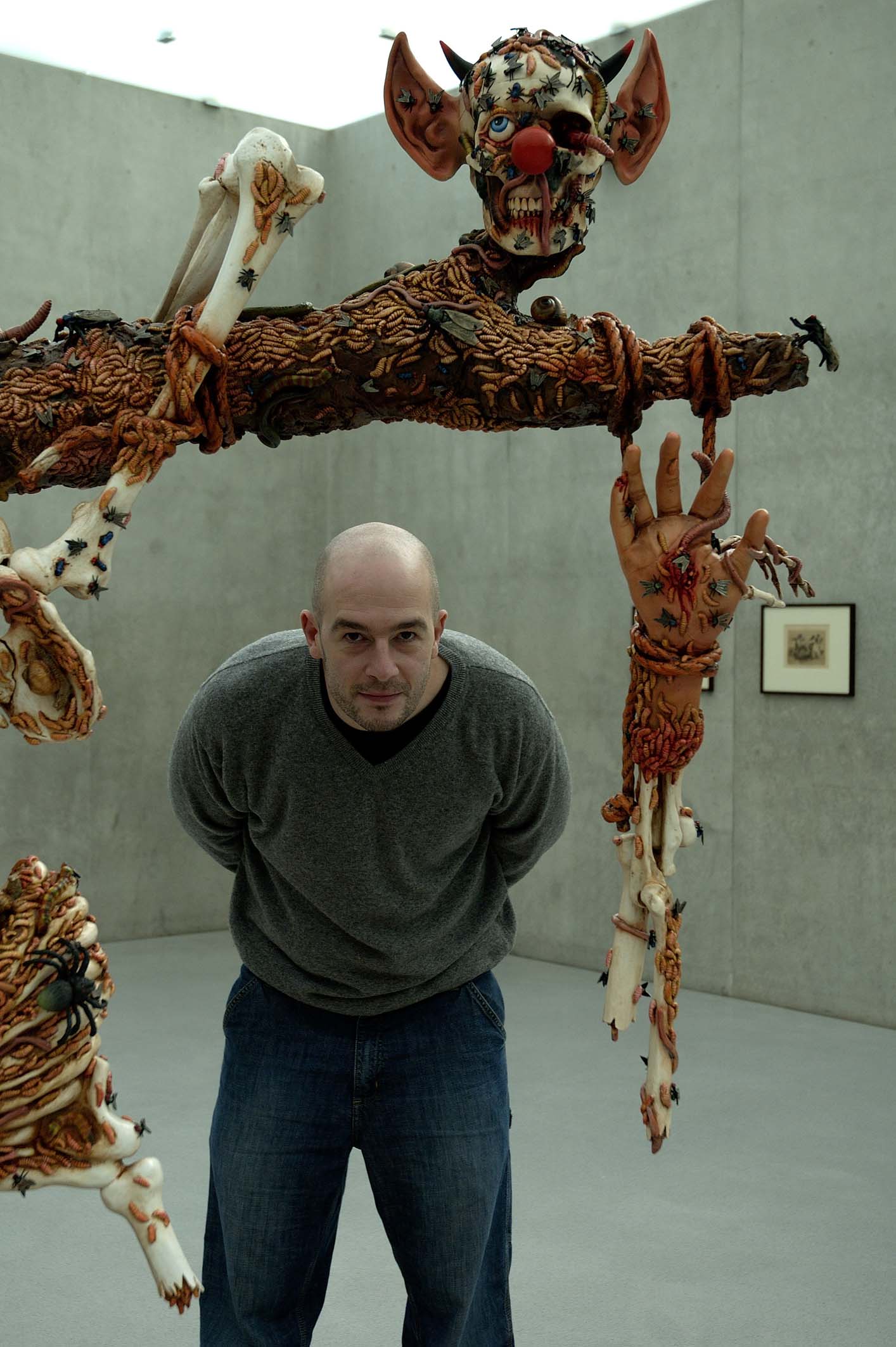
Among the Chapmans' most significant projects is Hell, an elaborate installation comprising numerous glass vitrines containing thousands of miniature figures enacting scenes of mass violence, staged within a landscape evoking the aesthetics of totalitarian atrocity. The original installation was destroyed in a 2004 warehouse fire at the Momart storage facility in London, which claimed numerous other significant works from the Saatchi Collection. Rather than treating this loss as final, the Chapmans later produced Fucking Hell, a nine-vitrine successor work that reasserted their commitment to the themes explored in the original, demonstrating a characteristic refusal to be deterred by destruction or controversy
Insult to Injury and the Goya Interventions
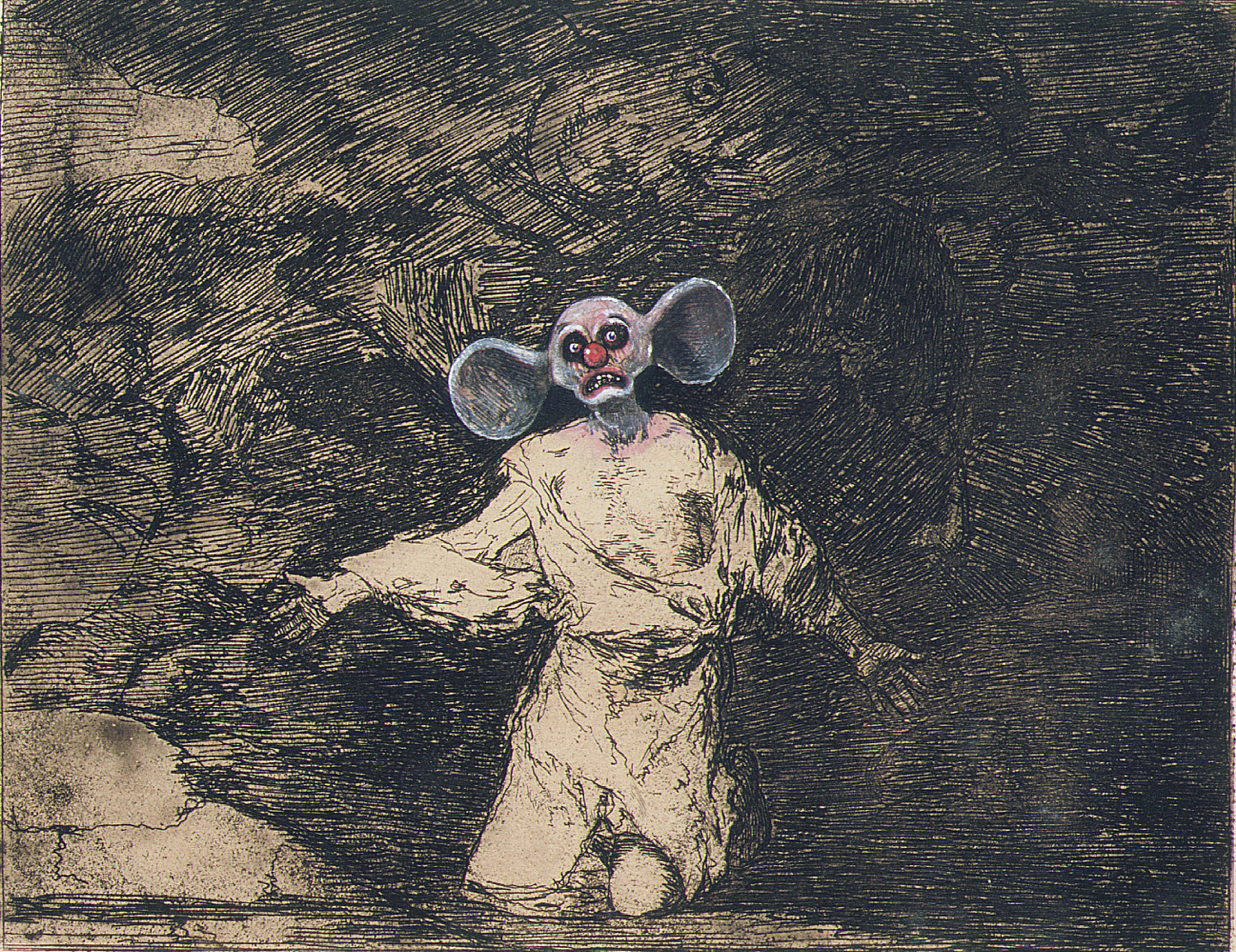
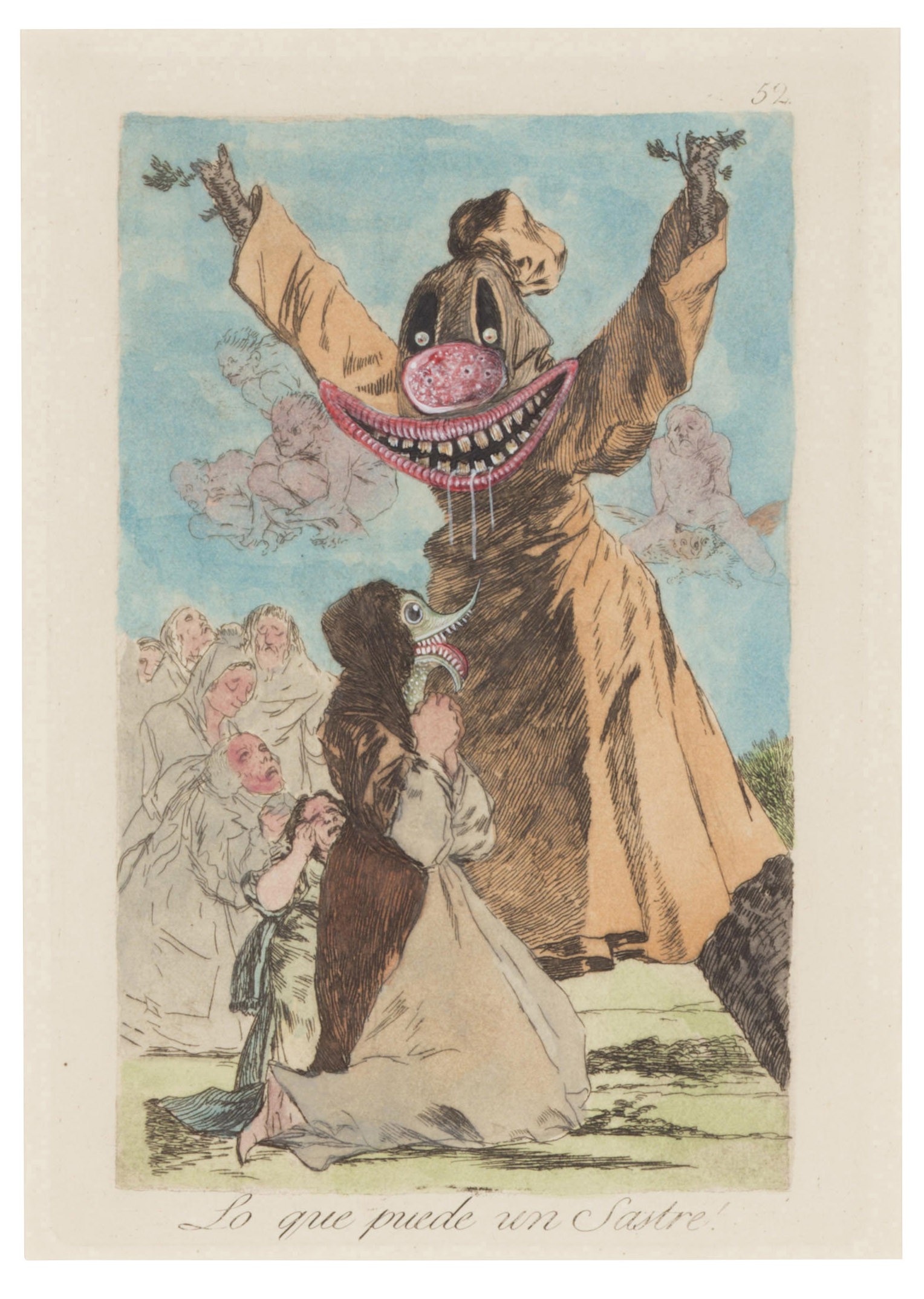
In 2003, the Chapmans produced Insult to Injury, a body of work involving the physical alteration of an original set of Goya's Disasters of War prints, onto which the brothers painted grotesque clown and puppy heads over the depicted figures. The project generated substantial critical debate regarding the ethics of altering historically significant original artworks, raising questions about iconoclasm, authorship, and the limits of artistic intervention upon inherited cultural heritage. For the Chapmans, such controversy is not incidental but constitutive: the act of defacement becomes, itself, a form of critical commentary on the sanctification of art historical canon.
Printmaking and Smaller-Scale Works
Beyond their large-scale installations, the Chapmans have maintained a prolific practice in etching, drawing, and print editions, frequently engaging with historical source material, literary texts, and found imagery. This body of work, while receiving comparatively less public attention than their sculptural installations, nonetheless demonstrates the technical range and conceptual consistency that underpins their broader practice.
Insights Into the Artists' Personal Collaboration
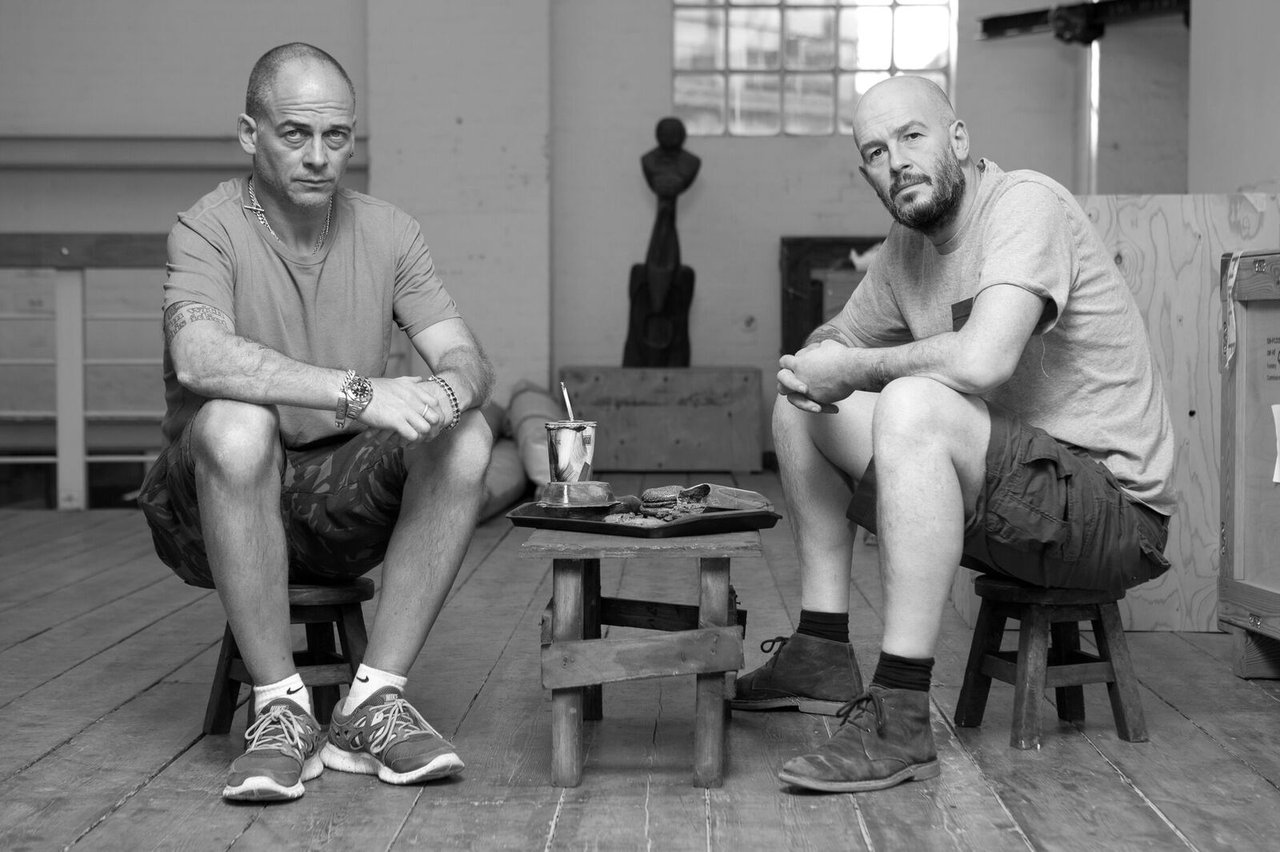
The Chapmans have been notably resistant to conventional narratives of artistic biography, often employing irony and provocation in interviews to deflect straightforward interpretation of their personal motivations. Their collaborative working method, in which individual contributions to a given work are rarely delineated, reflects a deliberate strategy of authorial ambiguity. This approach extends their critique of the romantic myth of solitary genius into their own public identity, positioning the "Chapman Brothers" as a singular artistic entity rather than two distinct individual practices operating in parallel.
Dinos Chapman has also pursued creative work beyond the collaborative partnership, including explorations in music production, suggesting that while the brothers' primary public identity remains collaborative, each maintains distinct creative interests pursued independently.
Why Does the Chapmans' Work Remain Critically Significant?
The enduring relevance of Jake and Dinos Chapman's practice lies in its refusal to offer comfortable resolution. Choose to engage with their work if you are prepared to confront difficult questions about historical violence, the ethics of representation, and the commercialisation of atrocity within contemporary visual culture. Their sustained critique of Enlightenment optimism, combined with technical mastery across sculpture and printmaking, situates them among the most intellectually demanding practitioners to emerge from the YBA generation.
For collectors and institutions considering the Chapmans' work, it is worth noting that their output spans both monumental installation pieces, largely held within major institutional and private collections, and smaller editioned prints, which remain more accessible for acquisition. Each category offers distinct engagement with the brothers' thematic concerns, though the sculptural installations most fully realise the immersive, confrontational quality
Exploring the Chapman Brothers Further
Jake and Dinos Chapman's collaborative practice offers a sustained, uncompromising meditation on violence, consumerism, and the fragility of civilised ideals. Their willingness to court controversy, whether through the physical alteration of historical artworks or the construction of deliberately disturbing sculptural tableaux, has secured their position as among the most provocative voices within contemporary British art. For those seeking to deepen their understanding of post-YBA practice, engaging directly with works such as Fucking Hell or Insult to Injury, whether through institutional collections or exhibition archives, offers invaluable insight into the brothers' enduring critical project.
Frequently Asked Questions
Who are Jake and Dinos Chapman?
Jake and Dinos Chapman are British brothers who have worked as a collaborative artistic duo since 1989. Associated with the Young British Artists movement, they are known for sculpture, installation, and printmaking that explore violence, consumerism, and historical atrocity.
What is the Chapmans' most famous work?
Their installation Hell, and its successor Fucking Hell, created after the original was destroyed in the 2004 Momart warehouse fire, are among their most widely discussed works, alongside their reworkings of Goya's Disasters of War.
Why is the Chapmans' work considered controversial?
Their work is considered controversial due to its explicit engagement with violence, its physical alteration of historical artworks such as original Goya prints, and its use of disturbing, mutated child-like figures that subvert conventional expectations of innocence.
What themes run throughout their practice?
Recurring themes include the failure of Enlightenment rationalism, the relationship between consumer capitalism and historical atrocity, and the destabilisation of childhood innocence through grotesque transformation.
How did the Chapman brothers begin working together?
Both brothers studied art in London and worked as studio assistants to Gilbert & George before formally establishing their collaborative practice in 1989, choosing to work under a shared artistic identity rather than as individual practitioners.